
UPDATE 1618 GMT:
Iran’s Foreign Ministry claims Tehran has reached an agreement with Oman on the route for the Strait of Hormuz after technical negotiations.
Spokesman Esmaeil Baghaei said, “Despite US obstruction, the talks have made positive progress over the past three weeks and an agreement has been reached on the shipping route map.”
Baghaei said the two sides were negotiating outstanding issues, including a joint statement.
UPDATE 1613 GMT:
Israeli Prime Minister Benjamin Netanyahu’s office says three soldiers were seriously wounded in a Hezbollah attack in the Ali Taher ridge area of southern Lebanon overnight.
The office said the Israel Defense Forces responded with airstrikes.
The strikes killed at least seven people, including three children and two women, outside the town of Ansar. Netanyahu’s office claimed “Hezbollah deliberately put civilians in that military compound.”
UPDATE 1605 GMT:
Yemen’s port of al-Makha has suspended commercial and maritime operations after being hit by more than 25 missiles in Houthi attacks.
The strikes killed seven people and caused an estimated $16 million in damage.
UPDATE 1112 GMT:
Israel’s airstrikes have killed at least two more people and wounded another nine in Deir al-Zahrani in southern Lebanon.
Lebanese Prime Minister Nawaf Salam said earlier Israeli strikes that killed seven people, including three children, were “extremely dangerous” and undermined efforts to establish stability in the south.
“The seven martyrs in the Israeli strike on Ansar town were not ‘military infrastructure’, and the children and women killed were not military targets,” Salam emphasized.
UPDATE 0522 GMT:
Three Israeli airstrikes have killed seven people, including three children, and wounded three outside the town of Ansar in the Nabatieh district in southern Lebanon.
Civil defense officials say the death toll is preliminary as rescue operations continue.
Israeli forces continue to dismantle homes and other sites as they establish a zone of occupation. The latest operations are in and near Bint Jbeil, with the demolition of houses and firing of heavy machineguns towards residential areas.
Israeli warplanes launched an air strike on the al-Mashaa neighbourhood in the town of al-Mansouri in the Tyre district.
UPDATE 0518 GMT:
Iran Foreign Minister Abbas Araghchi says Tehran has not decided to restart talks with the US.
Messages being exchanged via Qatar and Pakistan do not amount to negotiations, Araghchi emphasized.
The Foreign Minister reiterated that, after talks with Oman define a route through the Strait of Hormuz, the US will have to meet conditions for shipping to resume through the waterway.
UPDATE, AUG 15:
The Abu Dhabi National Oil Company says one of its vessels was attacked in the Strait of Hormuz on Friday evening. There were no casualties.
UPDATE 2030 GMT:
A Houthi attack on Yemen’s port city of Mokha killed six people, two of them security personnel.
The insurgents fired five missiles at commercial ships, setting two on fire.
UPDATE 1635 GMT:
Only two vessels have passed through the Strait of Hormuz on Friday: a grain ship entering Iranian waters and an empty dry bulk ship going in the other direction.
A separate empty liquefied petroleum products tanker is sailing into the Persian Gulf via the Strait.
Nine vessels passed through the waterway on Thursday, up from five on Wednesday but below the average of 12 for August.
Before the US-Israel War on Iran, around 135 ships crossed the Strait daily.
UPDATE 0912 GMT:
The UAE has blamed Iran for attacks in the Strait of Hormuz on two vessels linked to State-owned Abu Dhabi National Oil Company.
There were no injuries and the situation was “brought under control”.
The Gulf Cooperation Council has also expressed condemnation.
Secretary General Jasem Mohamed Albudaiwi said the GCC “strongly condemns the brutal Iranian attack”. He emphasized that “the repeated targeting of navigation, facilities, and properties constitutes an unacceptable escalation and a grave violation of international law”.
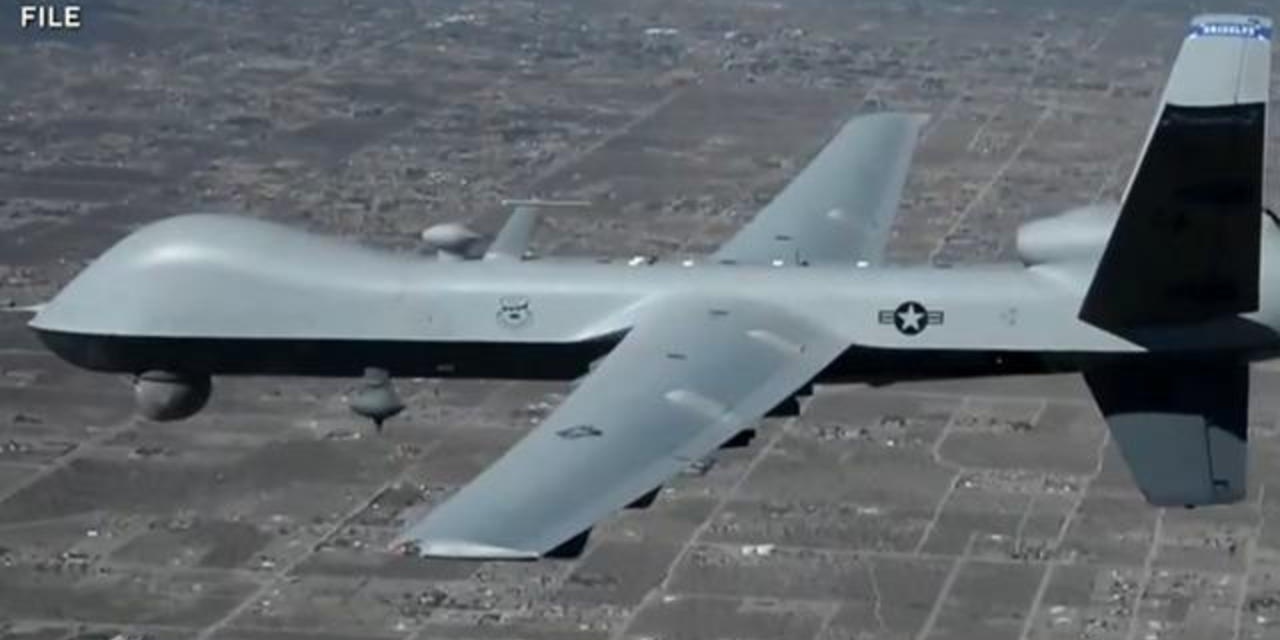
ORIGINAL ENTRY: The US has lost at least 45 of its MQ-9 Reaper drones, around 25% of its fleet, in its War on Iran.
“Three US officials familiar with the matter” confirmed the losses. They compound American shortages of missiles and munitions, including of air defense interceptors and offensive missiles, which have limited the Trump Administration’s options almost six months into its war.
The Reaper, which conducts surveillance and targeted strikes, costs between $30 million and $50 million depending on its sensors and weapons. The potential cost of recent losses is more than $1.3 billion.
The US military has around 185 Reapers, 165 in the Air Force and 20 in the Marine Corps. Others are operated by American intelligence agencies.
The drone has been used around the Strait of Hormuz, controlled by Iran. Because it flies slowly and often at low altitudes, it is vulnerable to interception by the Iranians, Yemen’s Houthis, and Tehran-backed militias in Iraq.
A fourth US official said some of the Reapers crashed after their operators’ communications link failed.
The US has expended more than 850 Tomahawk cruise missiles and more than 1,000 Patriot and THAAD missiles during the war, cutting deeply into stockpiles.
Donald Trump has insisted that the US faces no shortage of weapons, even as he has pulled back from wider strikes inside Iran.
But in May, Lt. Gen. David Tabor told the Senate that the number of remaining Reapers had fallen to about 135. He said he was “concerned” and the Air Force was exploring how to replenish its fleet quickly.

“The US military has around 185 Reapers, 165 in the Air Force and 20 in the Marine Corps. Others are operated by American intelligence agencies.”
HAD not has.
Trump’s Iran headaches are mounting: https://edition.cnn.com/2026/08/13/politics/trump-iran-war-developments