
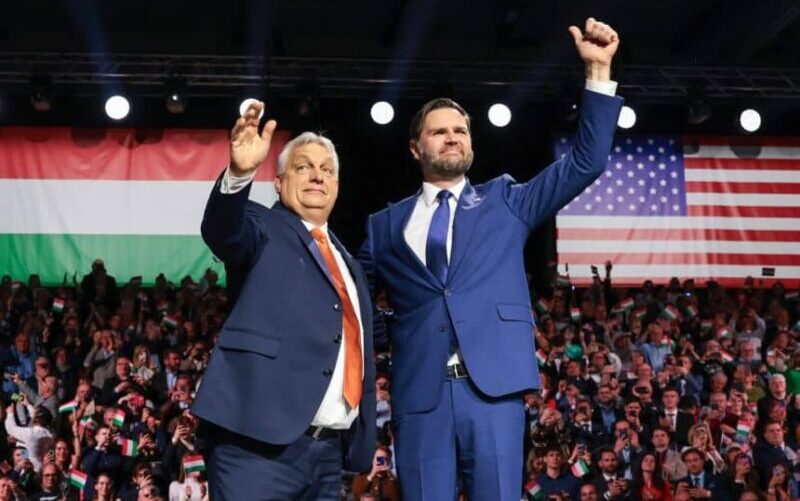
J.D. Vance alongside Viktor Orbán at Orbán’s campaign rally in Budapest, Hungary, April 7, 2026 (Jonathan Ernst/Getty)
I joined CEO Retort’s Tim El-Sheikh to explore how the Trump camp, in its second term in the White House, has promoted far-right parties in Europe.
In the context of global realignments, I consider how the Trumpists have interacted with parties like AfD in Germany. I note the failures of centrist governments that have worsened the situation.
But I also look for possibilities in a progressive approach to economic and social issues, and in the development of an effective European community.
- 2:20: How the global uncertainty caused by Trump 2.0 and Russia has spurred realignment and fed the rise of the far right in Europe
- 7:28: How the AfD party in Germany presents itself to voters
- 13:57: Far-right hypocrisy and political opportunismwith populists masquerading as “true representatives” of ordinary working people
- 18:45: The failure of mainstream parties and “centrist” governments that created space for the far-right populists
- 26:05: Effective progressive leadership amid the need for a clear economic and social vision
- 28:06: Thanks to Trump 2.0, Europe has an opportunity to build new alliances in which collaboration matters more than nationalism