
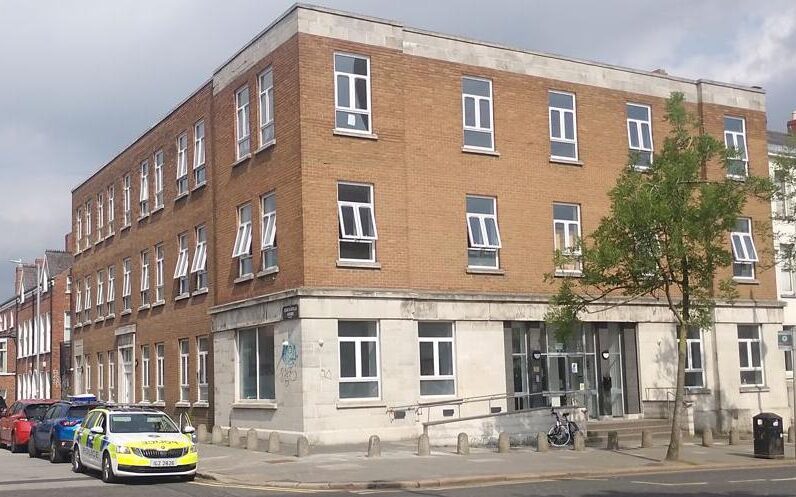
The Belfast Islamic Centre
Fractured Britain Is At A Crossroads
On June 9, Stephen Ogilvie was brutally attacked in north Belfast. He was left with life-changing injuries, including the loss of his left eye and serious wounds to his face, neck and back. Hadi Alodid, a Sudanese man who reportedly claimed asylum in the UK, has since been charged with attempted murder.
The attack understandably shocked Northern Ireland. Graphic footage spread rapidly across social media, fuelling anger and demands for answers. For some, outrage at the actions of an individual quickly became hostility towards entire communities. The assault was used to justify threats to migrants, asylum seekers, Muslims, and others far removed from the events on Kinnaird Avenue.
Amidst the outrage, Stephen Ogilvie’s family showed remarkable dignity. While others sought to exploit their tragedy, they appealed for calm and made clear that they wanted no part in the hatred being spread in their loved one’s name: “We do not want this terrible tragedy to be used to divide people or fuel hostility.”
Their words should have been enough. They were not.
Instead, calls for vengeance grew louder and soon spilled from social media into the streets. Residents found themselves paying the price for a crime they had nothing to do with. Homes were attacked. Properties were set alight. Families fled neighborhoods they had every right to believe were their home.
There is a reason why so many people looking at Belfast are using a word that makes others uncomfortable: pogrom.
Organized mobs targeting vulnerable communities, homes burned out, families forced to flee, and an atmosphere of fear deliberately cultivated against an identifiable minority — these are not just scenes of disorder or unrest. They are attacks designed to send a message: you do not belong here.
That message is not confined to Belfast. For many from Britain’s minority communities, the scenes unfolding across Northern Ireland are painfully familiar. They have happened before. They could happen again.
A Random Act of Violence Met By An Organized Pogrom
The word organized should be taken literally here. This was not a spontaneous outburst of public anger. Those involved knew exactly which areas to target, which homes to approach and which streets to descend upon. The public deserves answers. Who arranged this? Who financed it? Who coordinated it? What networks made it possible?
Because what happened in Belfast bears all the hallmarks of something far more deliberate than politicians and commentators seem willing to acknowledge.
Perhaps the most striking aspect of the past few days has not been the violence itself, but the uncomfortable questions hanging over this moment. If minority communities had been setting fire to white families’ homes while children ran for their lives, would the national conversation be about the “legitimate concerns” of those minorities? Would we be debating the social conditions that radicalized them? Would commentators be searching for explanations and context? Or would the full force of political condemnation, media scrutiny, and state power have been deployed?
The double standard is glaring. There is a two-tier system in Britain — but not the one about which we have been endlessly lectured. When minorities are the perpetrators of crime, condemnation is immediate and collective. When minorities are the victims of racial violence, understanding is extended to those responsible, explanations are sought, context is provided and urgency evaporates.
When other communities have faced serious threats, we have seen what a determined state response looks like. Emergency COBRA meetings are convened. National leaders make statements. Police resources are mobilised. The public is left in no doubt that the safety of those communities is a national priority.
So where is that urgency now?
Much of the response has descended into what can only be described as disaster porn. Cameras capture burning homes whilst commentators narrate scenes of chaos and Politicians offer ritual condemnations. All the while, audiences consume the spectacle. Yet the deeper questions remain largely untouched. The suffering of real families becomes content while the ecosystem that produced that suffering remains largely hidden from view.
This is an ecosystem where outrage is monetized and algorithms reward fear. Where influencers build audiences by identifying enemies. Where every social problem becomes an immigration problem, every economic challenge becomes a migration challenge, and every community anxiety becomes an opportunity to point the finger at an outsider.
The tragedy is that those spreading these narratives rarely face the consequences when their rhetoric spills into the real world. When hatred moves from mobile phone screens, X timelines and Facebook feeds to burning homes and terrified families, the same voices suddenly profess shock and surprise.
But nobody should be surprised. Words shape attitudes, attitudes shape behaviour and behaviour shapes societies. The consequences are now visible on the streets of Belfast.
The Warning To Be Heeded
Britain’s minority communities look at these events and see the warning. If families can be targeted, terrorized and driven from their homes while the national response remains hesitant and subdued, what confidence should anyone have that they will be protected when their turn comes?
That question should concern every single one of us.
A country cannot remain united if there is a two-tier system of protection where those who look, sound or pray differently are afforded less protection. Equal citizenship means equal protection. It means that the fear experienced by a migrant family in Belfast matters as much as the fear experienced by anyone else anywhere in the United Kingdom.
To stop this poison, our Government must act with urgency. Those responsible for these attacks must face justice. Vulnerable communities must be protected. Those who incite hatred and violence must be held accountable, whoever they may be.
History teaches us that hatred never stops with its first target. It grows, evolves and constantly searches for new scapegoats. The lesson of Belfast is not that one community is under threat. It is that when any community can be terrorised with impunity, we all become less safe.
This is not an isolated local crisis. It is a warning. The question is whether anyone in power is prepared to listen before it is too late.
