
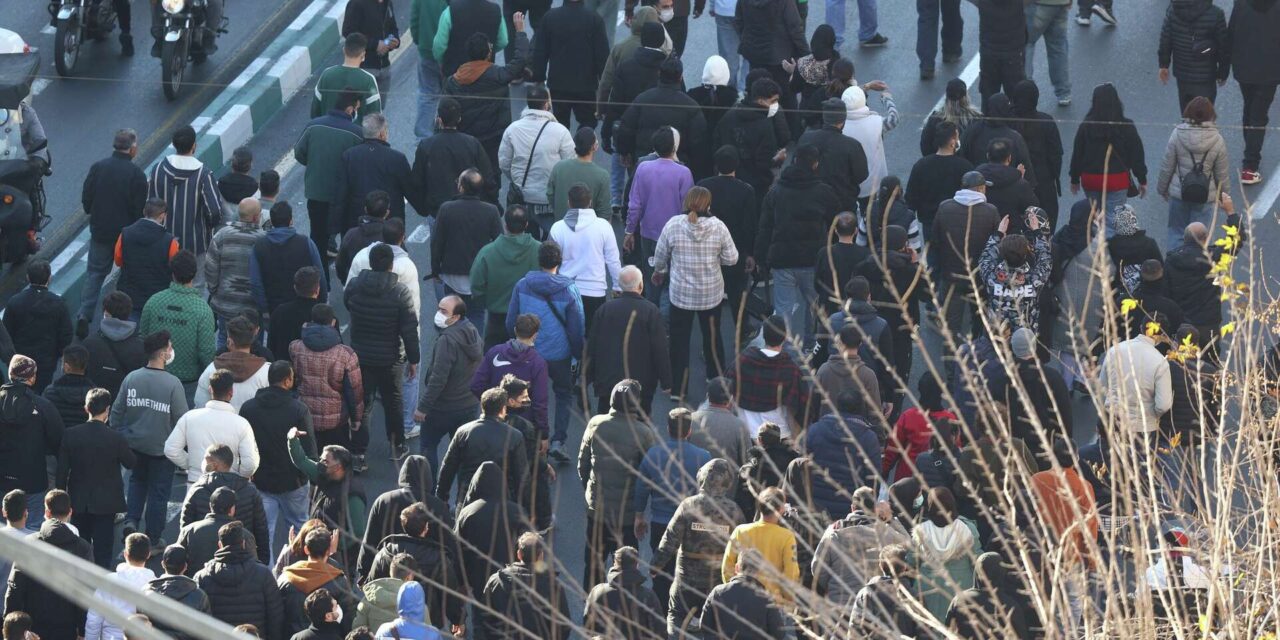
Protesters challenge economic conditions, Tehran, Iran, December 29, 2025
“No Future For Us, So Why Cower and Hide?”: The Protesters in Iran
EA on Monocle Radio and DW News: Assessing Iran’s Strikes and Protests
UPDATE, JAN 7:
Protests continue across Iran for an 11th day despite a heavy security presence.
Videos confirm demonstrations in Tehran; Lorestan Province in the west; Qazvin in the northwest; Mashhad in the northeast; Shiraz in the southwest; and Bandar Abbas in the south.
Shopkeepers have gone on strike in Ilam Province in western Iran.
The scene in Aligudarz in Lorestan Province:
ویدیوی رسیده به ایران اینترنشنال نشان میدهد که اعتراضات روز چهارشنبه ۱۷ دیماه در الیگودرزِ استان لرستان گسترش یافته و جمعیت بیشتری به معترضان اضافه شده است. معترضان یکصدا فریاد میزنند: «امسال سال خونه، سیدعلی سرنگونه» pic.twitter.com/ROOo5j1KZF
— ايران اينترنشنال (@IranIntl) January 7, 2026
Iranian authorities have put out contradictory statements. Government spokeswoman Fatemeh Mohajerani calls protesters “our children” and said the administration is listening to their voices: “All ministries and state bodies have been instructed … to engage in dialogue and pursue the people’s demands.”
But Tehran’s Prosecutor General warned the judiciary will deal “decisively and without leniency” with those “disrupting public order”, branding protesters as “rioters”.
UPDATE, JAN 6:
Iranian security forces reportedly used gunfire and tear gas overnight in an attempt to disperse protesters, including in Bampur in Sistan and Baluchistan Province in southeastern Iran and in Yasuj in the west.
️ On the evening of January 5, Baluch political activists shared a video saying Islamic Republic forces opened fire on protesters in Bampur, in Sistan and Baluchistan Province, in an effort to suppress the demonstrations.#Iran #IranProtets2026 pic.twitter.com/qY6atWjvNU
— IranWire (@IranWireEnglish) January 6, 2026
Students at Birjand University in northeast Iran:
️ Students at the University of Birjand held a protest march on the evening of January 5, chanting slogans such as ‘This year has given many martyrs to the IRGC, death to the entire regime’ and ‘We didn’t give martyrs to compromise, or to praise the murderous leader.’ The United… pic.twitter.com/GdRwydJNEH
— IranWire (@IranWireEnglish) January 6, 2026
UPDATE, JAN 5:
Protests spread on Sunday to 222 locations across 78 cities and towns in 26 of Iran’s 31 province, reports the Human Rights Activists News Agency.
The toll has risen to at least 20 people killed — 19 civilians and one member of the security forces. At least 51 people have been injured, most by pellets and rubber bullets.
UPDATE 1656 GMT:
Claims are circulating of protesters killed and injured when security forces opened fire in Malekshahi in Ilam Province in western Iran.
The crowd was gathered at a funeral, chanting slogans such as “Death to the Islamic Republic” and “Death to Khamenei”.
A video circulating on social media shows the start of gunfire at protesters in the western city of Malekshahi, Ilam province, on Saturday. Information shared with Iran International indicates at least five people were killed and around 30 wounded during the incident. pic.twitter.com/spHJMhhLRv
— Iran International English (@IranIntl_En) January 4, 2026
UPDATE, JAN 4:
Iranian security forces reportedly fired tear gas as they confronted merchants and protesters and tried to reopen major shopping centers.
Security forces fired tear gas and confronted merchants and protesters at Alaeddin shopping center and Charsou mall in central Tehran on Sunday, videos received by Iran International show. pic.twitter.com/TlE5DEj9d8
— Iran International English (@IranIntl_En) January 4, 2026
Protests continue on university campuses, including Tarbiat Modares University in Tehran and Bijrand University in Khorasan Province in northeast Iran.
تصاویر منتشر شده در ۱۴ دی۱۴۰۴ از دانشگاه بیرجند در خراسان جنوبی نشان میدهد دانشجویان با برگزاری تجمع اعتراضی شعارهایی چون «زن، زندگی، آزادی- مرد، میهن، آبادی»، «تا آخوند کفن نشود، این وطن وطن نشود» و «پلیس خودش قاتله، این حکومت باطله» سردادند.
اعتراضات در ایران وارد روز هشتم… pic.twitter.com/bNvHCg7yXS
— BBC NEWS فارسی (@bbcpersian) January 4, 2026
UPDATE 1846 GMT:
A deputy governor general of Qom Province in central Iran says a 17-year-old boy was shot and killed during protests on Friday night.
Plainclothes agents arrest a young protester in the city of Sari in northern Iran on Saturday night:
A video obtained by Iran International shows plainclothes agents arresting a young protester in the city of Sari in northern Iran on Saturday night.
Dozens of people have been arrested so far in various Iranian cities, according to human rights groups.pic.twitter.com/9xFvzgnd3N— Iran International English (@IranIntl_En) January 3, 2026
UPDATE 1447 GMT:
Sources confirm that Amirhossein Bayati, a coffee shop owner known as Amir Caffeine, was shot and killed by security forces during protests in the city of Hamedan in western Iran on Thursday evening.
Following their standard practice, security agents have prevented his family from taking custody of his body. They surrounded relatives when the body was transferred to the hospital and confiscated their mobile phones.
Bayati had been married less than a year.
UPDATE 1441 GMT:
In his first statement about the nationwide protests, the Supreme Leader has urged authorities to confront and suppress the demonstrations.
“Protest is legitimate, but protest is different from rioting. We talk to protesters, but there is no use in talking to rioters. Rioters must be put in their place,” Ayatollah Khamenei said.
Khamenei declared that some protesters had been incited from abroad.
That some people, under various titles and names, come with the aim of destruction and creating insecurity, positioning themselves behind faithful, healthy and revolutionary merchants and exploiting their protests to cause unrest, is unacceptable.
We will not back down in the face of the enemy. Relying on God and with confidence in the support of the people, we will bring the enemy to its knees.
UPDATE 1438 GMT:
The Iranian Teachers’ Trade Associations have urged security forces not to turn against protesters.
“You come from the heart of this society. Standing against the people is standing against your own future and that of your children,” the Associations’ Coordination Council said in a statement. “Refrain from staining your hands with the blood of the people and be certain that history will not forget these moments.”
UPDATE 0908 GMT:
Taking a harder line against protests, President Masoud Pezeshkian has blamed them on foreign actors.
Pezeshkian claimed Iranians were being incited from abroad to create insecurity. He said authorities should not allow “enemies” to achieve their aims.
At a meeting with the minister and senior officials of the Agriculture Ministry, he that a task force should be formed to address the problems of merchants and businesses.
UPDATE, JAN 3:
The killing of Ahmadreza Amani, a trainee lawyer, by Iranian security forces has been confirmed.
Amani was shot during protests on Thursday in the city of Azna in Lorestan Province in western Iran.
The head of the Yazd Bar Association, Mohammad Hossein Jafari, has written to the head of the judiciary calling for a thorough investigation.
Amani was completing the second stage of his legal traineeship. A person close to the family said Amani’s body has not yet been handed over to his family, with security forces pressuring relatives to blame protesters for his death.
UPDATE 1652 GMT:
Protesters in eastern Tehran, chanting “Death to the Dictator” and “Death to Khamenei”:
#BREAKING After two days of relative calm in Iran's capital, protesters poured into the streets of Tehranpars and Haft-Howz in eastern Tehran on Friday night, chanting "death to the dictator" and "death to Khamenei".pic.twitter.com/j9J4MT8z2E
— Iran International English (@IranIntl_En) January 2, 2026
Chanting in Yasuj in southwest Iran, “Seyyed Ali [Khamenei] will be toppled this year”:
"Seyyed Ali (Khamenei) will be toppled this year," the people of Yasuj were heard chanting during demonstrations on Friday evening.pic.twitter.com/SQn04LXjnU
— Iran International English (@IranIntl_En) January 2, 2026
Protesters in Zahedan in southeast Iran also chanting “Death to Khamenei”:
People in Zahedan, Sistan and Baluchestan province, took to the streets after Friday prayers, chanting slogans including “Death to Khamenei.” pic.twitter.com/iFDH3Rd5rF
— Iran International English (@IranIntl_En) January 2, 2026
UPDATE 1314 GMT:
Another protester slain by Iranian security forces has been identified.
Ahmad Jalil, 22, was shot during demonstrations in Lordegan in western Iran on Thursday.
“Sources close to the family” said agents from the Revolutionary Guards’ intelligence branch summoned Jalil’s relatives to the provincial governor’s office, threatening not to release his body unless they gave an interview blaming protesters for his death.
UPDATE 1312 GMT:
Mourners at the funeral of Khodadad Shirvani, a protester killed in Marvdashat in southwest Iran on Thursday, chanted “Death to Khamenei”:
Footage shared with Iran International shows mourners at the funeral of Amirhessam Khodayarifard, a protester killed in Kuhdasht, forcing government forces to flee the ceremony.pic.twitter.com/zLqwd09dmF
— Iran International English (@IranIntl_En) January 2, 2026
UPDATE 1308 GMT:
The father of Amirhosam Khodayarifard, killed in Kohdasht in western Iran on Wednesday, has denied regime claims that his son was a member of the Basij paramilitary force.
The elder Khodayarifard said at his son’s funeral on Friday in Kohdasht, “My son was not a Basiji. He did not cause unrest. God will take revenge for him.”
Mourners at the funeral chant, “Basijis, Guards, you are the ISIS [Islamic State]”:
Mourners at the funeral of Amirhossein Khodayari-Fard, killed during protests in Kuhdasht, chanted slogans directly at government forces present, shouting: “Basiji, Sepah, ISIS — it’s you,” as tensions flared during the burial.pic.twitter.com/DS7LNobx5U
— Iran International English (@IranIntl_En) January 2, 2026
Security forces forced by the crowd to leave the funeral:
Footage shared with Iran International shows mourners at the funeral of Amirhessam Khodayarifard, a protester killed in Kuhdasht, forcing government forces to flee the ceremony.pic.twitter.com/zLqwd09dmF
— Iran International English (@IranIntl_En) January 2, 2026
UPDATE 1110 GMT:
Ahmad Alamolhoda, the Supreme Leader’s representative in Iran’s second city Mashhad, claims footage of protests is being faked with artificial intelligence.
Alamolhoda insisted Israeli media and “enemy-affiliated outlets” film crowds and then use AI technology to overlay anti-government chants onto the images.
UPDATE, JAN 2:
Two more protesters slain by Iranian security forces have been identified.
Shayan Asadollahi, a 28-year-old barber, was shot during demonstrations in Azna in Lorestan Province in western Iran on Thursday night.
A witness said several military Hilux vehicles of the Revolutionary Guards attacked a group returning from the demonstration. A live round struck Asadollahi in the abdomen.
The witness claimed at least two other protesters were slain.
Khodadad Sharifi Monfared was killed by gunfire from Iranian security forces during demonstrations in Marvdasht in Fars Province in southwest Iran.
The funeral of Dariush Ansari Bakhtiarvand, a protester killed during demonstrations in Fooladshahr in Isfahan Province, was held on Friday.
UPDATE 1654 GMT:
In Lorestan Province in western Iran, where there have been reported fatalities, protesters stone and overturn a car of the Iranian security forces after the driver is pulled away.
تصاویری از اعتراضات در نورآباد دلفان لرستان به بیبیسی فارسی رسیده است که در بخشی از آن صفکشی نیروهای گارد ویژه مقابل معترضان و واژگون کردن و به آتش کشیدن یک خودروی نیروهای امنیتی بهدست معترضان دیده میشود.
در ویدیوهایی که از این اعتراضات در حوالی میدان بعثت این شهر منتشر… pic.twitter.com/Xf8KSEqCJV
— BBC NEWS فارسی (@bbcpersian) January 1, 2026
In the holy city of Qom, protesters pelt motorcycle-riding special agents with stones and chant, “Don’t be afraid, don’t be afraid, we are all together”:
این ویدیو از اعتراضها در قم منتشر شده است که نشان میدهد معترضان، گروهی از ماموران ویژه موتورسوار را سنگباران میکنند. در ویدیوی دیگری که مربوط به ساعتی پیش از ویدیوی اول است، تجمع معترضان دیده میشود که شعار میدهند «نترسید، نترسید، ما همه با هم هستیم».
مکان این ویدیوها در… pic.twitter.com/yhsGw8xgk2
— BBC NEWS فارسی (@bbcpersian) January 1, 2026
Chants of “Clerics, get lost”:
Protesters in the religious city of Qom were heard chanting “Clerics must get lost” in rare antigovernment demonstrations in the Shiite bastion.pic.twitter.com/jc72E3lgVf
— Iran International English (@IranIntl_En) January 1, 2026
In Nahavand in Hamedan Province in western Iran, security forces fire on protesters:
تصاویری که روز پنجشنبه ۱۱ دی در شبکههای اجتماعی منتشر شده، شلیک مستقیم به سوی معترضان در نهاوند در استان همدان و پرتاب سنگ از سوی ماموران را نشان میدهد. pic.twitter.com/f32qF8alc0
— BBC NEWS فارسی (@bbcpersian) January 1, 2026
UPDATE 1334 GMT:
“Several” people have reportedly been killed during clashes, according both to semi-official media and the human rights group Hengaw.
The Revolutionary Guards said a paramilitary Basiji had been killed in the city of Kuhdasht. It claimed 13 other members were wounded.
The Chief Justice of Lorestan Province announced “the formation of a judicial case and the comprehensive pursuit of this incident” for “decisive and uncompromising action against those responsible and the perpetrators”.
Hengaw reported that a protester was shot dead in Fuladshahr in Isfahan Province in central Iran.
The victim was identified as Dariush Ansari Bakhtiarvand, 37,
On Wednesday, a senior judicial official denied reports of the killing of Mahdi Samavati, 18, by security forces during a demonstration in front of the governor’s office in Fasa in Fars Province in southern Iran.
Video of security forces firing towards protesters in Lordegan in Chaharmahal and Bakhtiari in southwest Iran:
تصاویری که در شبکههای اجتماعی منتشر شده، شلیک به سوی معترضان در لردگان در استان چهارمحال و بختیاری در روز پنجشنبه ۱۱ دی را نشان میدهد. pic.twitter.com/qTr0QlqsRX
— BBC NEWS فارسی (@bbcpersian) January 1, 2026
UPDATE, JAN. 1:
Vendors at Tehran’s central fruit and vegetable market march on Thursday morning, chanting, “No Gaza, no Lebanon, my life for Iran”:
A video received by Iran International shows vendors at Tehran’s central fruit and vegetable market holding a march on Thursday, chanting slogans including “No Gaza, no Lebanon, my life for Iran.”pic.twitter.com/3pdLMk7F9C
— Iran International English (@IranIntl_En) January 1, 2026
Security forces seize students at Shahid Beheshti University in Tehran:
چهارشنبه شب تصاویر و گزارشهایی از بازداشت چند دانشجو در مقابل ساختمان معاونت دانشجویی دانشگاه شهید بهشتی تهران منتشر شد.https://t.co/6X2TAYQEBu pic.twitter.com/XpFy9magMP
— BBC NEWS فارسی (@bbcpersian) December 31, 2025
Protesters in Bagh-e Malek in Khuzestan Province in southwest Iran, facing police officers, dance and chant “Death to the Dictator” and “Long Live the Shah”:
تصاویر تجمع شبانه ۱۰ دی ۱۴۰۴ گروهی از شهروندان در باغملک استان خوزستان در شبکههای اجتماعی مورد توجه قرار گرفته است. در ویدیوها دیده میشود که دهها معترض در وسط خیابان و رو در روی ماموران نیروی انتظامی با شعارهای «مرگ بر دیکتاتور و جاوید شاه» پایکوبی میکنند.
در تصاویر چند… pic.twitter.com/zt98gRHId0
— BBC NEWS فارسی (@bbcpersian) January 1, 2026
UPDATE 2047 GMT:
Protesters in Khorramabad in Lorestan Province in western Iran, chant, “Neither Gaza nor Lebanon, my life for Iran”:
تصاویر منتشر شده از همدان حضور نیروهای امنیتی را نشان میدهد. یکی از ویدیوها دو معترض را نشان میدهد که در مقابل ماشین آبپاش ضدشورش مقاومت میکنند. این در حالی است که دمای این شهر ۲ درجه زیر صفر است. pic.twitter.com/YlFBAwBDXk
— BBC NEWS فارسی (@bbcpersian) December 31, 2025
UPDATE 2032 GMT:
Clashes between protesters and security personnel in Hamedan in western Iran:
تصاویری از پیادهراه بوعلی همدان به دست بیبیسی رسیده که شعارهای اعتراضی و در پی آن تعقیب و گریز نیروهای امنیتی با معترضان را نشان میدهد. پیشتر تصاویری از مقاومت دو معترض در مقابل ماشین آبپاش ضدشورش در همین خیابان منتشر شده بود. pic.twitter.com/CTP6ZcbUMf
— BBC NEWS فارسی (@bbcpersian) December 31, 2025
In temperatures close to freezing, two students stand in front of a water cannon:
تصاویر منتشر شده از همدان حضور نیروهای امنیتی را نشان میدهد. یکی از ویدیوها دو معترض را نشان میدهد که در مقابل ماشین آبپاش ضدشورش مقاومت میکنند. این در حالی است که دمای این شهر ۲ درجه زیر صفر است. pic.twitter.com/YlFBAwBDXk
— BBC NEWS فارسی (@bbcpersian) December 31, 2025
Protests at Beheshti University in Tehran, Isfahan Industrial University, and Ferdowsi University in Mashhad….
A student refer to high prices, inflation, inefficiency, oppression, and corruption: “Know that the ruling criminal system, which has taken away our future for 47 years, will neither change with reforms nor with false promises.” Chants include, “The student does not accept humiliation” and “Woman, Life, Freedom, Man, Homeland, Prosperity”.
تصاویری از تجمعات اعتراضی دانشجویان دانشگاههای بهشتی تهران، صنعتی اصفهان و فردوسی مشهد که امروز ۱۰ دی برگزار شدهاند در شبکههای اجتماعی فراگیر شدهاند.
در تجمع دانشگاه بهشتی یکی از دانشجویان در بیانیهای به بحرانهای جاری در کشور چون گرانی، تورم، ناکارآمدی، ظلم و فساد اشاره… pic.twitter.com/3bMVEOEulj
— BBC NEWS فارسی (@bbcpersian) December 31, 2025
UPDATE 1703 GMT:
Protesters in Nahavand in Hamedan Province in western Iran, chanting, “We do not want the Islamic Republic”:
راهپیمایی و تجمع شبانه معترضان در نهاوند با شعار «جمهوری اسلامی نمیخوایم» pic.twitter.com/5tN8sW6W0R
— ايران اينترنشنال (@IranIntl) December 31, 2025
UPDATE 1509 GMT:
Security forces have reportedly fired toward protesters during a demonstration in the city of Kouhdasht in Lorestan Province in western Iran:
ویدیوی رسیده به ایراناینترنشنال از ایستادگی مردم مقابل نیروهای سرکوب در کوهدشت. صدای شلیک چند گلوله در طول ویدیو شنیده میشود. pic.twitter.com/EQ8YiGk6FE
— ايران اينترنشنال (@IranIntl) December 31, 2025
Clashes are also reported in Isfahan in central Iran:
ویدیوی رسیده به ایراناینترنشنال از تجمع اعتراضی مردم در نقش جهان اصفهان و درگیری معترضان و ماموران سرکوب. pic.twitter.com/ral0GBvzuP
— ايران اينترنشنال (@IranIntl) December 31, 2025
Video of water cannon deployed on Valiasr Street, one of Tehran’s main thoroughfares:
یک شهروند با ارسال ویدیویی به ایراناینترنشنال در چهارشنبه ۱۰ دی، حضور خودروی آبپاش ماموران را در جنوب خیابان ولیعصر تهران و در تقاطع خیابان «امام خمینی» نشان میدهد. pic.twitter.com/1TS4nIN4Bu
— ايران اينترنشنال (@IranIntl) December 31, 2025
UPDATE 1506 GMT:
President Masoud Pezeshkian is taking a harder line as tension builds across Iran.
Having said on Tuesday that peaceful protest is legitimate and the Government must people’s concerns over economic conditions, Pezeshkian claimed today that Iran faces “external pressure from the enemies of the country”: “Unfortunately, inside the country, instead of synergy and support, some positions and actions cause weakening and harm.”
UPDATE 1501 GMT:
A senior judicial official in southern Iran has denied reports of the first fatality in the nationwide protests.
Claims circulated that Mahdi Samavati, 18 was killed by security forces’ gunfire on a demonstration in front of the governor’s office in Fasa in Fars Province.
Hamed Ostovar, the head of Fasa’s justice department, said images confirmed damage to part of the governor’s office, including broken glass and the guard post door: “During the incident and after police entered the area, four of the attackers were arrested.”
He claimed three police officers were injured.
UPDATE 1333 GMT:
Protests are reported in cities such as Tehran, Fasa in southern Iran, Kermanshah in the west, and Isfahan in the center.
Heavy security presence is reported in Mashhad, Iran’s second city, and near Tehran’s Charsou Mall.
The scene in Isfahan:
ویدیوی رسیده به ایراناینترنشنال نشان میدهد مردم معترض در اصفهان چهارشنبه ۱۰ دی در میدان نقشجهان تجمع اعتراضی برگزار کردند. pic.twitter.com/6MDwBcaywu
— ايران اينترنشنال (@IranIntl) December 31, 2025
Another union, the Syndicate of Workers of Tehran and Suburbs Bus Company, has backed the protests.
The Syndicate said, “The deprived people have the right to protest against repressive policies, the state’s attack on public livelihoods, structural corruption and widening class gaps.”
UPDATE 0843 GMT:
A divide may be opening between the Supreme Leader’s office and Iran’s President Masoud Pezeshkian over the response to protests and strikes.
Hossein Shariatmadari, appointed by the Supreme Leader as editor-in-chief of the Kayhan newspaper, has derided remarks by Government spokeswoman Fatemeh Mohajerani.
Echoing Pezeshkian’s message, Mohajerani said:
The Government recognizes the protests. We emphasize the right to peaceful assembly that is recognized in our Constitution.
When the people’s voices are heard, it means that the pressures are heavy and the government’s job is to hear the voices. Obviously, inflation above 50 percent means people’s voices are raised.
Shariatmadari snapped in response:
When all the documents and evidence indicate the dependence of the small group of rioters on the Zionist regime and economic problems are not even seen in their slogans, what “protests” are you talking about?…
Where in your words are these protests worthy of being heard?
Iran’s Prosecutor General Mohammad Movahedi-Azad said peaceful protests over livelihood are understandable. However, he warned that any attempt to turn the protests into insecurity or to damage public property would be met with a “legal, proportionate and decisive” response.
“What we cannot be indifferent to is structured misuse of these legitimate demands,” he said, referring to “directed media networks, distorted narratives, and the use of deceived individuals or those who disrupt public order”.
UPDATE, DEC 31:
Allameh Tabataba’i University and Shahid Beheshti University in Tehran have suspended in-person classes until the end of term.
Iran’s Deputy of Student Affairs in the Ministry of Science, Research and Technology wrote universities on Tuesday that “in view of the cold weather, energy imbalance, and to create greater readiness for students to participate in exams”, classes in the last week of semester can be virtual. The letter did not cite growing protests on campuses.
Six University of Tehran students who were arrested on Tuesday have been released from detention.
UPDATE 1806 GMT:
Videos of protests across Iran this evening….
Protesters chant “Death to the Dictator” in Arak in central Iran:
Iranian protesters in the central city of Arak chanted "death to the dictator" on Tuesday evening, a video obtained by Iran International shows.pic.twitter.com/D3O8WT9YiT
— Iran International English (@IranIntl_En) December 30, 2025
Clashes in Hamedan in western Iran:
بر اساس ویدیوهای منتشرشده در شبکههای اجتماعی، شامگاه سهشنبه ۹ دی در همدان نیروهای امنیتی با معترضان درگیر شدهاند. pic.twitter.com/3AvG9NVpqd
— BBC NEWS فارسی (@bbcpersian) December 30, 2025
Protesters in Fars Province in southwest Iran, “This year is the year Seyed Ali [the Supreme Leader] will be overthrown”:
با ادامه اعتراضات در نقاط مختلف ایران، سهشنبه ۹ دی تصاویری از معترضان در ممسنی در فارس منتشر شده است. در این تصاویر معترضان شعار «امسال سال خونه٬ سید علی سرنگونه» سر میدهند. pic.twitter.com/uhVT5qiyVt
— BBC NEWS فارسی (@bbcpersian) December 30, 2025
UPDATE 1758 GMT:
A student was severely injured when Basij paramilitary forces reportedly attacked a gathering near Tehran’s Amirkabir University.
At least five university students were arrested, four outside the Tehran University campus and one at Sharif University of Technology.
Footage of Amirkabir students chanting, “Basiji, IRGC [Revolutionary Guards], you are our ISIS”:
این تصاویر از اعتراض گروهی از دانشجویان دانشگاه صنعتی امیرکبیر تهران در روز سه شنبه ۹ دی ۱۴۰۴ منتشر شده است. در ویدیو به نظر میرسد دانشجویان مقابل گروهی دیگر که پرچم جمهوری اسلامی به دست دارند شعار «بسیجی، سپاهی، داعش ما شمایید» سر میدهند.
پس از شروع اعتراضات به افزایش قیمت… pic.twitter.com/7swe4oz2QU
— BBC NEWS فارسی (@bbcpersian) December 30, 2025
UPDATE 0923 GMT:
Shopkeepers in south Tehran’s Shoush and Molavi districts have again closed their stores. There are reports of protests in parts of the capital’s main bazaar.
Security forces have deployed at Valiasr Square, one of Tehran’s busiest intersections and a frequent gathering point.
Shopkeepers in Isfahan in central Iran reportedly joined strikes, with merchants in the historic Naghsh-e Jahan Square closing their stores.
There are also claims of closures in the cities of Shiraz and Ahvaz.
Judiciary spokesman Asghar Jahangir warned that “citizens” would not permit existing problems to become “a pretext for the enemy’s attack on the ideals and values of the nation”.
ORIGINAL ENTRY, DEC 30: Strikes and protests are spreading in Iran’s capital Tehran over the country’s mounting economic problems.
Crowds gathered on the streets despite attempts by security forces to disperse them with volleys of tear gas. One of the rallies was at Tehran’s Grand Bazaar, where many merchants closed their shops.
As inflation rises to an official level well above 40%, Iran’s currency is plummeting to record lows. The rial now stands at 1,386,000:1 v. the US dollar. That is a 97% decrease in value from early 2018, when the currency stood at 45,000:1, and a 43% decline from the last year’s level of 800,000:1.
On Tuesday morning, President Masoud Pezeshkian said, “I have asked the Interior Minister to listen to the legitimate demands of the protesters by engaging in dialogue with their representatives so that the government can do everything in its power to resolve the problems and act responsibly.”
State media acknowledged the demonstrations. The Iranian Labor News Agency said protesters “are demanding immediate government intervention to rein in exchange-rate fluctuations and set out a clear economic strategy”. It quoted complaints: “Continuing to do business under these conditions has become impossible.”
Other outlets betrayed concerns. The Revolutionary Guards’ Fars warned of “insecurity” and “destabilization”: “These gatherings could become a new platform for the activities of the cells of unrest.”
Speaker of Parliament Mohammad Bagher Ghalibaf said people’s grievances over livelihoods required “full responsibility” from officials and dialogue with representatives of professional guilds.
He praised Pezeshkian’s intervention, saying measures should focus on boosting purchasing power, reforming economic decision-making, and ensuring coordinated action across the government. Urgent steps were needed to protect household incomes and strengthen the central bank’s authority in economic policy.
However, he warned, “Ill-wishers want to drag people’s demands into disorder and unrest. The people of Iran know the enemy and its malicious goals.”
The official statements showed no sign of checking the growing discontent. The national truckers’ union has declared full support for shopkeepers and protesters: “The unity of the bazaar and the drivers is the only way out of this situation.”

Rumors of protester killed at hands of regime in Iran protests false: https://www.jpost.com/middle-east/iran-news/article-881911
Israel’s Mossad tells Iranian protesters ‘We are with you’: https://english.alarabiya.net/News/middle-east/2025/12/31/israel-s-mossad-tells-iranian-protesters-we-are-with-you-
“Israel’s Mossad spy agency issued a direct call urging Iranians to press on with protests, saying it was supporting them “on the ground” as demonstrations spread in capital Tehran and other Iranian cities. “Go out into the streets together. The time has come. We are with you,” Mossad wrote in a post on its Farsi-language X account, Israel’s army radio reported on Wednesday.”
https://www.jpost.com/middle-east/iran-news/article-881733
“As protests grow across Iran, the Mossad posted an unusual Farsi message urging demonstrators to act, saying it is with them in the streets, amid rising economic pressure and public unrest.”
[Editor’s Note: Iran State media’s attempt to take the narrative away from the protests.]
Crowds were much bigger at the 9 Dey commemoration in Tehran: https://en.mehrnews.com/news/240302/Tehraners-mark-anniversary-of-Dey-9-at-Imam-Hossein-Square
Iranians commemorate 9th Dey: https://snn.ir/fa/news/1350556
Students Join Iran Protests As Unrest Grows Over Economic Crisis
https://www.rferl.org/a/iran-economic-crisis-protests-university-students/33636664.html
[Editor’s Note: The fall of the rial has been under every Iranian Government, and the Supreme Leader’s oversight, since 2018.]
The fall of the rial is something that has happened under Pezeshkian’s watch: https://apnews.com/article/iran-traders-protest-rial-currency-ddc955739fb412b642251dee10638f03
“Reports about Farzin’s possible resignation had been circulating over the past week. When he took office in 2022, the rial was trading at around 430,000 to the dollar.”
Under Raisi, the rial slipped from 300,000 to 430,000 over 3 years but never as much as the drop in 18 months seen recently.
The rial plummeted the most under Rouhani from 32,000 to 300,000 over 8 years. https://www.iranintl.com/en/20211206225621
“Since early 2018, Iran’s rial has dropped to more than 300,000 against the US dollar, while just four years ago the dollar was traded at 32,000 rials. “
Iran’s president reacts to Trump’s threat, vows ‘severe’ response to ‘oppressive’ aggression: https://www.presstv.ir/Detail/2025/12/30/761553/Iran-president-reacts-to-Trump-threats-vows-severe-response-to-oppressive-aggression
Trump has okayed another Israeli strike on Iran’s ballistic missile program and air defenses – at Netanyahu’s behest – and has acknowledged, for the first time, that the nuclear sites he “obliterated” in June are being rebuilt.
https://www.iranintl.com/202512302100
https://www.iranintl.com/en/liveblog/202512283787#202512308493