
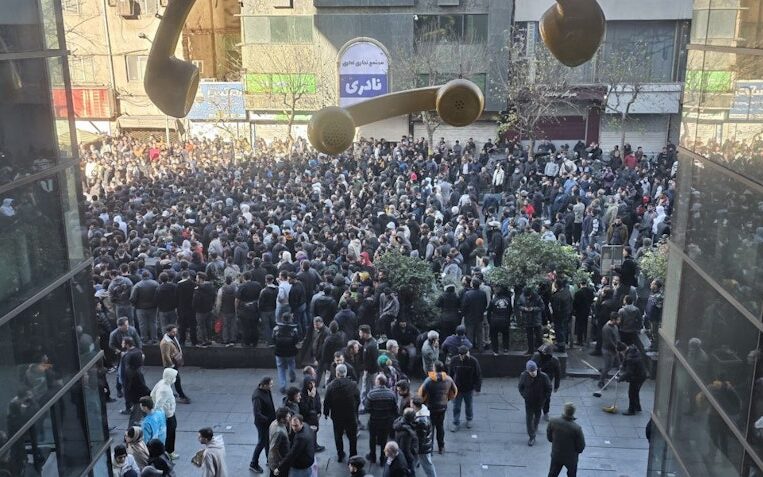
Traders and shopkeepers protest on Jomhouri Street, Tehran, Iran, December 30, 2025
Strikes Spread in Tehran Over Iran’s Economic Problems
UPDATE, JAN 2:
I spoke with DW News on Friday as part of their coverage of the latest developments in protests across Iran over economic conditions.
I begin with the dissection and dismissal of Donald Trump’s “locked and loaded” threat to intervene, pointing out how his diatribe only helps a regime portraying the protests as foreign-directed.
The fundamental is that change, if it is going to come, cannot be imposed on Iran from the outside. It has to come from inside the country.
So I hope the focus of the media will be on the demands for reforms and justice, as well as complaints over economic conditions.
I suggest encouragement of the call for peaceful reform and rights, but “when you get to the point of violence in the streets, you have to be careful not to be seen as endorsing violence against the regime because you will give them the pretext to strike back and strike back hard”.
I challenge the assumption that the aim of the protests is to return Reza Pahlavi to the throne in Iran, notably that this claim is amplified by the diaspora outside the country.
My contribution is from 5:05:
ORIGINAL ENTRY, DEC 31: I joined Monocle Radio’s The Globalist on Wednesday to assess the spread of Iran’s strikes and protests over serious economic problems.
Listen from 2:03:
Host Emma Nelson and I examine how rising inflation and a collapsing currency spurred the most extensive show of discontent since the 2022 “Woman, Life, Freedom” protests.
How far could this go? Could this bring the long-overdue reforms for political and legal rights in Iran? Could it even mean the end of the Islamic Republic and its 86-year-old Supreme Leader?