
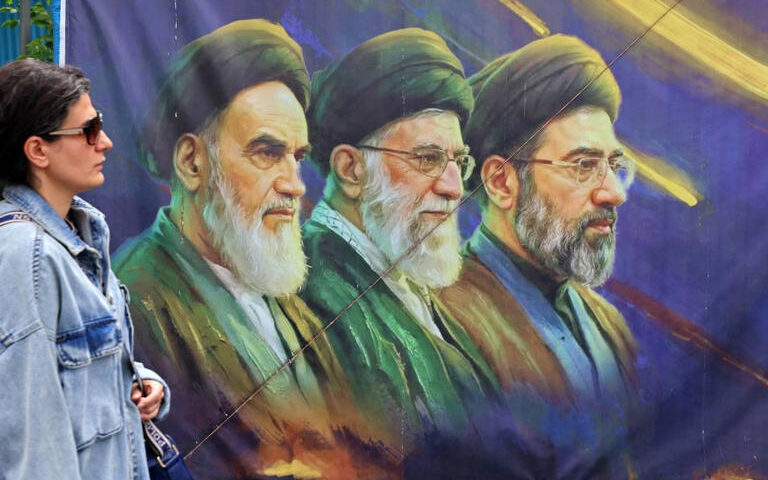
A woman walks past a banner of Iran’s past and present Supreme Leaders, Tehran, April 19, 2026 (Atta Kenare/AFP)
The World Cup Decision for Iranians Abroad: Support, Protest, or Both?
With the US-Israel war on Iran faltering, scholars Narges Bajoghli and Vali Nasr proclaimed at the start of June in “Iran’s New Grand Strategy” in Foreign Affairs magazine:
Rather than breaking Iran, the crucible of war has transformed it in unanticipated ways. To survive and establish new strategic advantages, the Islamic Republic had to adapt and innovate, changing how it waged war, ran the state, and managed society. And it had to do so with unprecedented speed. Tehran is now confident in what it has achieved and determined to consolidate those gains at home and abroad. The war has given rise to a new Iran, one that will reshape the Middle East and influence the course of geopolitics for years to come.
This is a useful corrective to the persistent predictions of imminent regime collapse. For decades, analysts have interpreted crises confronting the Islamic Republic as evidence that its political system was nearing exhaustion. The forecasts have never materialized. The regime has survived war, sanctions, domestic unrest, economic crises, international isolation, and successive challenges to its legitimacy. Any serious assessment of contemporary politics must acknowledge this record of endurance.
Yet survival and strength are not synonymous. The central question is not whether the Islamic Republic endured the current conflicts — it clearly did — but whether endurance itself constitutes evidence of renewed political power, social legitimacy, or strategic advantage. Bajoghli and Nasr convincingly portray the resilience of the regime. Their broader claims that this shows consolidation of power, societal cohesion, and regional ascendancy are considerably more difficult to sustain.
The distinction is important. Political systems can survive while becoming increasingly dependent on coercion. Military institutions can remain operational while suffering strategic setbacks. States can retain regional relevance even as their room for maneuver narrows. Resilience does not necessarily imply renewal.
A more cautious interpretation of recent developments is warranted. The Islamic Republic remains capable of preserving its institutions and adapting to external pressure. Whether it has emerged stronger, more legitimate, or more influential is a separate question — one that remains far more contested than “Iran’s New Grand Strategy” acknowledges.
Military Resilience and the Limits of Strategic Effectiveness
There is little doubt that the Islamic Republic retains substantial military capabilities despite the losses sustained during recent conflicts. Its ballistic missile program, cruise missile arsenal, and unmanned aerial systems continue to constitute important components of its deterrence strategy. As it has for decades, the security establishment adapts to an unfavorable strategic environment by emphasizing asymmetric warfare, decentralization, and the capacity to impose costs on stronger adversaries.
However, the persistence of these capabilities should not automatically be interpreted as evidence of strategic success. Military power ultimately derives not only from the ability to inflict damage but from the capacity to translate force into political outcomes. States may retain formidable coercive instruments while nonetheless failing to achieve their broader objectives. Demonstrating that the Islamic Republic can absorb punishment and can continue to retaliate is not equivalent to demonstrating that it has emerged from conflict in a stronger strategic position.
This distinction receives surprisingly little attention in “Iran’s New Grand Strategy”. The ability to survive military confrontation undoubtedly reflects institutional competence and organizational adaptability. Yet resilience in the face of pressure does not by itself reveal whether the regime’s strategic position has improved, deteriorated, or remained unchanged. The continued existence of military capabilities tells us relatively little about the broader political consequences of their use.
A similar issue arises over continuity of leadership. The Islamic Republic has repeatedly demonstrated an ability to replace senior officials, military commanders, and key administrators. Such continuity is hardly unusual among authoritarian systems. Indeed, many are specifically designed to withstand personnel losses by embedding authority within institutions rather than individuals.
The significant question is not whether senior figures can be replaced, but what the long-term implications of those replacements might be. The regime’s stability increasingly appears to depend on the coercive capacities of the security apparatus, extensive mechanisms of surveillance, and dense networks of ideological and institutional loyalty. These instruments may provide short-term stability, but their existence does not necessarily indicate broad political legitimacy or societal support. A state can preserve its organizational structures while simultaneously experiencing declining public trust, growing social alienation, and increasing reliance on coercion. The survival of institutions may therefore conceal underlying weaknesses rather than resolve them.
Historical experience offers numerous examples of authoritarian systems that appeared stable for long periods before encountering sudden crises of legitimacy. Their institutions endured until they no longer did. For this reason, institutional continuity should not be conflated with political consolidation. The fact that the Islamic Republic retains functioning military and administrative structures demonstrates resilience. It does not necessarily demonstrate renewed strength.
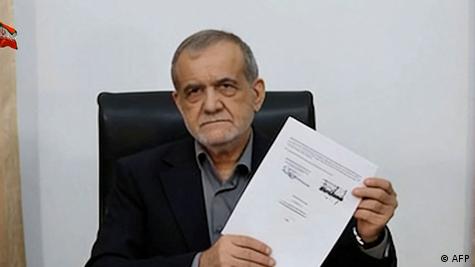
Iranian President Masoud Pezeshkian holds up a copy of the Memorandum of Understanding ending the US War on Iran, June 18, 2026
Public Opinion, Repression, and the Limits of Rally-Around-the-Flag
The interpretation of public sentiment in “Iran’s New Grand Strategy” raises similar concerns. The authors argue that external threats generated a broad rally-around-the-flag effect, drawing state and society closer together and reinforcing domestic cohesion. Such dynamics are not implausible. Periods of external confrontation often produce temporary increases in national solidarity, even among populations that remain critical of their governments. The extent of this effect within contemporary Iranian society remains difficult to establish, however.
Comparisons with the early years of the Iran-Iraq War should be approached cautiously. The political and social context of the 1980s differs profoundly from that more than four decades later. The ideological environment has changed substantially, as have demographic realities, social expectations, and patterns of political participation. There is no longer a figure comparable to Ayatollah Khomeini, the founder of the Islamic Republic, whose authority combined revolutionary legitimacy, religious prestige, and personal charisma.
Any assessment of social cohesion must account for the legacy of recent repression. The violent suppression of the January 2026 protests constitutes an essential part of the political context within which public attitudes toward the regime are formed. Regardless of the precise casualty figures, events of this magnitude leave lasting political consequences. They shape collective memory, influence perceptions of state legitimacy, and affect the willingness of citizens to engage in public political activity.
Under such conditions, political silence cannot automatically be interpreted as political support. Fear, intimidation, exhaustion, and perceptions of futility can all produce outward compliance without generating genuine loyalty. Citizens may refrain from public opposition because they believe resistance to be ineffective or dangerous, not because they have become reconciled with the political order. The absence of visible dissent therefore provides, at best, ambiguous evidence regarding underlying political attitudes.
This points to what may be the article’s most significant problem: its limited engagement with the role of repression. While considerable attention is devoted to demonstrations of national solidarity, far less attention is paid to the coercive mechanisms through which political order is maintained.
Authoritarian systems often appear stable until the moment they cease to be. The challenge for scholars is therefore not simply to document the absence of visible resistance but to distinguish between genuine legitimacy and enforced compliance.
The empirical basis for the authors’ claims regarding societal mobilization is similarly uncertain. Much of the evidence cited consists of public rallies, state media narratives, patriotic demonstrations, and other visible manifestations of support promoted by institutions associated with the regime. Such events undoubtedly demonstrate the state’s continuing capacity for mobilization. They reveal that the Islamic Republic retains organizational networks capable of bringing supporters into public space.
What they do not necessarily reveal is the broader distribution of political attitudes across society. In authoritarian contexts, public participation is an inherently ambiguous indicator. Large demonstrations may reflect genuine enthusiasm, but they may also result from organizational pressure, institutional coordination, economic incentives, or concern about the consequences of non-participation. Without independent surveys, systematic field research, or other reliable indicators of public opinion, strong conclusions about nationwide political sentiment remain difficult to sustain.
The problem becomes particularly apparent in the discussion of the alleged rally-around-the-flag effect. As supporting evidence, the authors point to demonstrations organized by regime supporters, foreign Shiite allies, and highly publicized human-chain events surrounding nuclear facilities. Yet such forms of mobilization have long been embedded within the symbolic repertoire of the Islamic Republic. Their occurrence demonstrates continuity in the state’s capacity to organize public displays of support; it does not necessarily demonstrate the emergence of a broader societal consensus.
Moreover, important segments of Iranian civil society remain largely absent from the analysis. Any attempt to assess social cohesion in contemporary Iran must engage with actors who exist outside both the regime and the exile opposition. Human rights advocates, labor activists, reformist dissidents, women’s rights campaigners, independent intellectuals, and imprisoned political figures continue to shape political discourse within the country. Their perspectives complicate any simple dichotomy between loyalists and opponents. Figures such as former Interior Minister and long-time political prisoner Mostafa Tajzadeh and veteran activist Abolfazl Qadyani occupy positions that cannot easily be reduced to either regime loyalism or exile opposition.
Nationalism, Ideology, and the Evolution of the Security Establishment
“Iran’s New Grand Strategy” depicts a younger generation of commanders whose outlook is increasingly shaped by nationalism rather than revolutionary ideology. This shift has made the regime more adaptable and better equipped to navigate a changing regional environment.
At first glance, the argument is persuasive. Contemporary official discourse differs in important respects from that of the revolutionary generation that came of age during the 1979 Revolution and the Iran-Iraq War. References to national sovereignty, territorial integrity, state strength, and historical continuity have become more prominent in public statements by senior military and political figures. The public image of the late Gen. Qasem Soleimani, assassinated by the US in January 2020, illustrates this development particularly well. Although deeply associated with the Islamic Revolution and the regime’s regional strategy, he was increasingly portrayed not only as a revolutionary figure but also as a national hero whose sacrifice transcended ideological boundaries.
The broader conclusions drawn from these observations are less convincing. The crucial question is not whether nationalist themes have become more visible. Rather, it is whether this rhetorical shift reflects a deeper transformation in the political identity of the security establishment itself. On this point, the evidence remains limited.
The claim of a fundamental ideological reorientation requires sustained analysis of elite discourse over time, changes in military education and training, shifts in institutional doctrine, or evidence from interviews, memoirs, and internal documents demonstrating a different understanding of the relationship between nation, state, and revolution. The article offers little such evidence.
The difficulty is compounded by the ambiguity of nationalism as an analytical category. The growing prominence of nationalist rhetoric does not necessarily imply a decline in revolutionary ideology. Political systems frequently draw on multiple sources of legitimacy simultaneously, particularly when they seek to appeal to different constituencies. Authoritarian regimes are especially adept at adapting their language while preserving core institutional commitments.
Recent developments suggest that nationalism and revolutionary ideology increasingly operate in tandem rather than in opposition. Official discourse continues to emphasize themes that have long occupied a central place in the regime’s worldview: resistance to Western influence, Islamic solidarity, martyrdom, and the defense of the broader Islamic community. Support for the so-called Axis of Resistance remains framed through explicitly ideological and religious narratives. At the same time, these commitments are increasingly justified in the language of national security, sovereignty, and strategic necessity.
This pattern points less toward ideological transformation than toward ideological adaptation. Rather than replacing revolutionary principles, nationalist themes appear to supplement them. The defense of the Islamic Republic is presented as synonymous with the defense of the nation. Regional power projection is framed not only as an ideological obligation but also as a prerequisite for national security. Under these conditions, separating nationalist and revolutionary motivations becomes increasingly difficult because official discourse deliberately fuses the two.
A further reason for caution lies in the institutional continuity of the security establishment itself. Many senior commanders remain deeply shaped by the experiences and narratives of the Iran-Iraq War. Even younger officers have been socialized within organizations whose institutional culture continues to draw heavily on revolutionary symbolism, religious concepts, and the memory of wartime sacrifice. This continuity makes the notion of a sharp ideological break difficult to sustain.
Indeed, some evidence points in the opposite direction. For years, significant segments of Iranian society have expressed frustration with the resources devoted to Syria, Lebanon, Iraq, and Yemen. The slogan “Not Gaza, not Lebanon, my life for Iran” captured a broader sentiment that external ideological commitments were often prioritized over domestic concerns. If a genuinely nationalist worldview had come to dominate the security establishment, one might expect a substantial reassessment of these priorities. Yet there is little indication that the underlying strategic logic has fundamentally changed. Support for regional allies and non-state partners remains a central pillar of the regime’s foreign and security policy.
A more modest interpretation is persuasive. The contemporary security elite is arguably more pragmatic than the revolutionary generation of 1979 and more attentive to questions of statecraft, deterrence, and geopolitical competition. Pragmatism, however, should not be confused with nationalism. Nor should the adoption of nationalist language be taken as evidence that revolutionary commitments have faded.
The available evidence instead suggests a process of rhetorical and strategic adaptation. The language has evolved, but the underlying worldview appears far more continuous than the article implies. What has emerged is not a post-revolutionary elite but a revolutionary elite that has adjusted its rhetoric to changing domestic and regional realities while preserving many of its foundational assumptions.
This distinction matters because it shapes how one understands the future trajectory of the Islamic Republic. If nationalism has genuinely displaced revolutionary ideology, the regime may gradually be moving toward a more conventional model of state behavior. If, however, nationalism primarily serves to reinforce and legitimize existing ideological commitments, then the transformation is considerably less profound. At present, the latter interpretation appears more consistent with the available evidence.
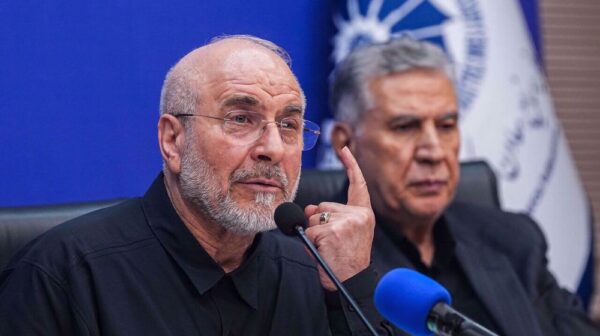
Iran Parliament speaker Mohammad Baqer Qalibaf during a meeting with the Iranian Chamber of Commerce, Tehran, June 17, 2026
Regional Power and the Limits of Influence
The article’s assessment of the Islamic Republic’s regional position raises similar concerns. According to the authors, recent conflicts ultimately reinforced the regime’s standing in the Middle East and demonstrated the continuing effectiveness of its regional strategy. There is no doubt that the Islamic Republic remains an important regional actor with substantial capabilities. Whether these capabilities have translated into greater influence, however, is far less clear.
The distinction is significant. States can remain highly consequential without becoming stronger. They can retain the capacity to disrupt regional developments without achieving regional predominance. They can continue to shape the calculations of their adversaries while simultaneously facing growing strategic constraints.
Much of the evidence presented in the article demonstrates relevance rather than ascendancy. The Islamic Republic retains important instruments of coercion. Its missile arsenal, relationships with non-state armed actors, and ability to threaten critical shipping routes continue to provide leverage. Recent conflicts have shown that the regime remains capable of imposing costs on adversaries and complicating their strategic calculations. These capabilities remain central to its deterrence strategy and should not be underestimated.
Yet the possession of disruptive capabilities is not synonymous with strategic success. The conflicts of 2025 and 2026 exposed important limitations in the regime’s regional position. Military confrontation revealed vulnerabilities alongside strengths. Strategic facilities, military installations, and elements of the command-and-control structure proved more exposed than official narratives often acknowledge. Resilience undoubtedly matters, but so does vulnerability. Any balanced assessment must account for both.
Economic constraints further complicate the picture. Years of sanctions, inflation, currency instability, declining investment, and structural mismanagement continue to impose significant costs on the Islamic Republic. Military resilience cannot be assessed independently of these broader economic realities. States may preserve military capabilities for extended periods while simultaneously experiencing economic deterioration that limits their long-term strategic flexibility.
The condition of the regime’s regional network also presents a more mixed picture than the article suggests. Several partners and allied organizations have experienced significant military and political setbacks in recent years. Others face growing domestic challenges that complicate their ability to project influence on behalf of the broader regional coalition. While the Axis of Resistance remains an important component of the regime’s strategy, its effectiveness appears more uneven than the article implies.
The broader regional response is similarly ambiguous. It is far from obvious that neighboring states interpreted recent conflicts as evidence of a strengthened Islamic Republic. Some observers may view the regime’s survival as proof of resilience. Others may see the same events as indications of growing strategic pressure and increasing risk tolerance. These interpretations are not mutually exclusive, but they lead to very different conclusions about the regional balance of power.
The article sometimes treats continued relevance as evidence of growing influence. The two should not be conflated. The Islamic Republic unquestionably remains a central actor in Middle Eastern politics. The more important question is whether its relative position has improved. On this issue, the evidence remains mixed.
A state can remain influential without becoming dominant. It can remain resilient without becoming stronger. It can preserve its strategic significance while facing mounting constraints. These distinctions are essential for understanding the regime’s regional trajectory, yet they often disappear in the article’s broader narrative of postwar consolidation.
Israel, the Gulf Monarchies, and the Changing Regional Order
A further weakness of the article lies in its limited engagement with the broader transformation of regional security dynamics, particularly the evolving relationships among Israel, the Gulf monarchies, and the Islamic Republic.
Over the past decade, the strategic landscape of the Middle East has undergone significant change. The signing of the Abraham Accords marked an important step in the gradual expansion of security and diplomatic cooperation between Israel and several Arab states. Although the pace of normalization has fluctuated and recent conflicts have complicated aspects of this process, the underlying strategic drivers have not disappeared.
Many Gulf governments continue to regard the Islamic Republic as an indispensable regional actor. At the same time, they remain concerned about its missile capabilities, regional networks, and ability to project influence beyond its borders. Their security policies therefore cannot be understood solely through the prism of bilateral relations with the regime.
In recent years, several Gulf monarchies have pursued a dual strategy. On the one hand, they have sought to reduce tensions through diplomatic engagement and pragmatic dialogue with the regime. On the other, they have continued to invest in security partnerships intended to hedge against future instability. These efforts reflect neither strategic realignment nor ideological convergence. Rather, they are expressions of risk management in an increasingly uncertain geopolitical environment.
Consequently, the region is best understood not as moving toward a new order centered on the Islamic Republic but as becoming more fragmented, flexible, and multipolar. Gulf governments increasingly seek to diversify their external relationships rather than rely excessively on any single partner. Security cooperation with the United States coexists with expanding economic ties to China, selective engagement with the Islamic Republic, and, where politically feasible, growing relations with Israel. Such strategies reflect uncertainty rather than confidence in any emerging regional hegemon.
For this reason, claims that the recent conflicts have decisively shifted the regional balance in favor of the Islamic Republic appear overstated. There is little doubt that American influence is no longer as uncontested as it once was. Concerns regarding the long-term reliability of U.S. security guarantees are genuine and have encouraged regional actors to reconsider their strategic options. Yet this process has not produced a regional order organized around the leadership of the Islamic Republic.
Instead, it has encouraged hedging behavior. Regional actors increasingly seek to maximize flexibility, avoid exclusive alignments, and preserve room for maneuver in an environment characterized by uncertainty. Such a system may be less predictable than its predecessor, but it is not necessarily more favorable to the regime.
Indeed, one of the defining characteristics of the contemporary Middle East is the extent to which states are attempting to maintain simultaneous relationships with multiple competing powers. Gulf monarchies increasingly engage Washington, Beijing, the Islamic Republic, and, where possible, Israel without fully committing to any one strategic bloc. This reflects caution about the future of the regional order rather than confidence in the emergence of a new one.
Any assessment of the Islamic Republic’s regional position must therefore account not only for its own capabilities but also for the strategic calculations of its neighbors. Once that broader context is considered, assertions of a substantially strengthened regional position become considerably more difficult to sustain.
Signals of Liberalization and the Problem of Interpretation
“Iran’s New Grand Strategy” attributes significance to recent domestic developments that some observers have interpreted as signs of greater social flexibility within the Islamic Republic. These include the appearance of unveiled women on state television and symbolic gestures that appear to depart from established patterns of cultural regulation.
The Islamic Republic has repeatedly employed selective and temporary forms of accommodation during periods of heightened political sensitivity. Similar gestures have appeared before elections, during moments of domestic tension, and in periods when the regime sought to improve its public image. In many cases, such measures proved tactical rather than transformative. For this reason, isolated symbolic developments provide only limited evidence of broader political reform.
Without corresponding institutional changes, legal reforms, or a measurable reduction in the state’s reliance on coercion, it is difficult to determine whether such developments reflect genuine adaptation or strategic image management. Symbolic flexibility and political liberalization are not synonymous. The continued prominence of coercive institutions in maintaining political order complicates interpretations that view symbolic concessions as evidence of a fundamental transformation.
Authoritarian systems frequently combine limited accommodation with sustained repression. The two strategies are often mutually reinforcing rather than contradictory. Selective concessions may help reduce social tensions, improve public perceptions, or divide potential opposition movements while leaving underlying power structures intact. Consequently, tactical flexibility should not be mistaken for democratization.
The broader analytical challenge is one of interpretation. Political signals rarely speak for themselves. Their significance depends on the institutional environment in which they occur and on whether they are accompanied by broader structural changes. Absent such changes, caution remains warranted. The developments in question may represent the early stages of a gradual recalibration of state-society relations. Equally, they may constitute another instance of adaptive authoritarianism — a strategy through which the regime adjusts its public posture while preserving existing structures of power.
Resilient But Far From Strong
At its strongest, “Iran’s New Grand Strategy” performs an important corrective function. It challenges simplistic narratives that portray the Islamic Republic as perpetually on the verge of collapse and questions the assumption that external military pressure necessarily translates into regime change. Doing so, it contributes to a more nuanced understanding of a political system whose longevity has repeatedly confounded both critics and observers.
The historical record leaves little doubt that the Islamic Republic possesses a remarkable capacity for adaptation. Over nearly five decades, the regime has survived war, sanctions, economic crises, domestic unrest, international isolation, and repeated predictions of imminent collapse. Any serious analysis must acknowledge this resilience.
The difficulty arises when resilience is equated with strength. The survival of a political system does not necessarily indicate renewed legitimacy. The absence of visible protest does not necessarily imply public support. The replacement of military commanders does not automatically demonstrate institutional health, nor does the preservation of military capabilities necessarily translate into strategic success.
Throughout the article, observations that convincingly demonstrate endurance are frequently used to support broader conclusions regarding political consolidation, social cohesion, and regional ascendancy. Yet these conclusions often extend beyond what the available evidence can sustain.
A more cautious interpretation appears warranted. The evidence demonstrates that the Islamic Republic remains capable of preserving its institutions, maintaining its coercive apparatus, and adapting to external pressure. It does not necessarily demonstrate that the regime has overcome the deeper political, social, and economic challenges that continue to shape its trajectory.
Many of the sources of instability visible in recent years remain unresolved. Economic hardship persists. Relations between state and society remain deeply strained. Political repression continues to play a central role in maintaining order. Significant segments of Iranian civil society remain alienated from the political system. None of these realities disappear simply because the regime survives a military confrontation.
The same caution applies to assessments of regional power. The Islamic Republic remains an influential actor with substantial capabilities and an extensive network of partners and allies. Yet influence should not be confused with dominance, nor resilience with strategic success. Recent conflicts revealed both the strengths and the limitations of the regime’s regional position. Any balanced assessment must account for both.
Similar reservations apply to claims regarding public opinion. State-sponsored mobilization, patriotic demonstrations, and official narratives may demonstrate the regime’s organizational
capacity, but they do not by themselves establish broad societal support. In the absence of independent polling, systematic field research, or other reliable measures of public attitudes, assertions of a nationwide rally-around-the-flag effect remain difficult to verify.
Most importantly, the role of repression remains insufficiently integrated into the analysis. Any effort to understand contemporary politics in the Islamic Republic must grapple with the relationship between coercion and stability. Political quiescence may reflect consent, but it may also reflect the costs of dissent. Distinguishing between these possibilities remains one of the central challenges in the study of authoritarian politics.
“Iran’s New Grand Strategy” is ultimately more persuasive in its critique of collapse narratives than in its argument for renewed strength. It successfully demonstrates that predictions of imminent regime collapse are often analytically weak and historically uninformed. It is considerably less successful in demonstrating that Iranian society has rallied behind the regime, that the Islamic Republic’s regional position has been substantially strengthened, or that the state’s political legitimacy has been meaningfully renewed.
In the end, the survival of the Islamic Republic should be understood as evidence of resilience — not necessarily as evidence of consolidation. Resilience tells us that the system has endured. It does not tell us whether the underlying tensions that continue to shape politics within the Islamic Republic have been resolved.

Of course the author is right to distinguish survival from strength. But the next question should be unavoidable: what follows from that?
In my view and that of Millions of Iranians, the Islamic Republic must go.
Iran does not primarily need another tactical adjustment, another controlled liberalization, or another temporary reduction of pressure. It needs the end of a system in which religion, state power, security apparatus, economic privilege and ideological foreign policy are fused into one structure.
Europe had to learn, after centuries of religious wars, that church and state must be separated. The Peace of Westphalia in 1648 was not the end of that process, but it marked a decisive step away from religiously justified state conflict. Iran should not have to wait through the same historical agony.
How can the world continue to tolerate state-organized networks of repression, corruption, militias, proxy war, religious policing and ideological control, all protected by the language of Islam? This is not about Muslims as people. It is about an islamist state structure that abuses religion as political armour.
So my question to the author is simple: if the regime is resilient but not strong, and if repression remains central to its survival, what should be done?
Is the answer merely to observe its resilience more accurately, or should democratic states actively support the Iranian people, isolate the regime’s coercive structures, and make clear that the only sustainable future is a secular Iranian state, with religion separated from political power?
Of course they should!
KJL
[Editor’s Note: While the UK monarch is nominally the head of the Church of England — going back to Henry VIII’s break from the Catholic Church in the 16th century — it is more than a stretch to claim British society is not secular.]
Little reminder: Many Western democracies are not themselves “secular”. The United Kingdom has an established Church and a head of state who is regarded as appointed by God.
What about the religious state of israel? If europe had learned that religion and state must be separated, why does european states and the us frantically support religious violence imposed upon palestinians?
Impressively sharp and detailed analysis and dysection of the prevailing but overly simplistic perceptions expressed in the Narges Bajoghli and Vali Nasr piece which, to be honest, in parts read like regime stratcom. Important reading for any commentator on the region at this time.
Leader delivers message about MoU signed with US: https://en.mehrnews.com/news/245434/Leader-addresses-nation-after-MoU-takes-effect
“As you have been informed, a memorandum of understanding was signed between the presidents of Iran and America. In the course of reaching this stage, the officials in charge, out of sincere concern and goodwill, made extensive efforts—and of course, it was the American president who, out of desperation, used all kinds of leverage to bring this about. I, as a matter of principle, held a different view; however, out of the commitment that the esteemed president—as the head of the Supreme National Security Council—gave to me on his own behalf and on behalf of the other members regarding the safeguarding of the rights of the Iranian nation and the Resistance Front, and his explicit acceptance of that responsibility, I granted my permission. He also explicitly stated that if the American side seeks to make excessive demands, they will not submit to them.”
In other words, Mojtaba is telling Pezeshkian and Ghalibaf that they own this forthcoming agreement and any fallout that comes with it.