
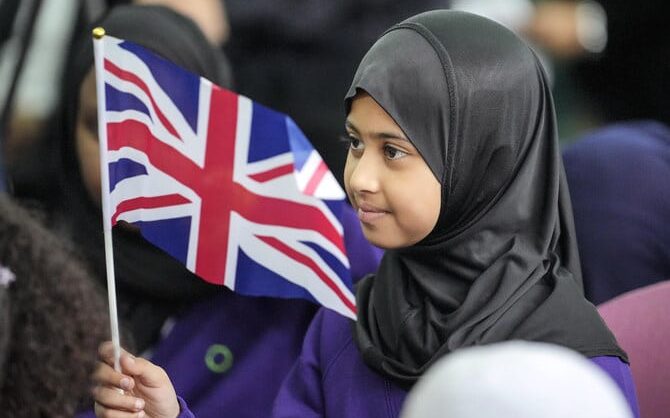
Photo: AP
Meeting the Challenge: UK Muslims and Moral Pragmatism
Last week I sat in my living room, with my 1-year-old son on my lap, as the evening news replayed scenes from the UK’s Budget Day. It was the usual breakdown of who gains, who loses, and how another set of Government fiscal decisions will shape everyday life. Then the bulletins quickly jumped to Ukraine, Gaza, and Sudan.
On the surface, the stories had nothing to do with one another. But as I viewed together next to each other, I felt the instability of the world and how conflicts abroad shaped the economy and politics at home.
A few days later, a friend mentioned the warning of retired Gen. Richard Shirreff warning that the US under Donald Trump has become “our enemy’s friend”, and that Europe may soon have to defend itself without guarantees established since World War II.
John Major, the UK Prime Minister from 1990 to 1997, made a similar point in his Maurice Fraser Lecture at LSE. As power shifts and alliances are rearranged, “much that we once took for granted is no longer certain”. Coming after Brexit and unresolved questions about Britain’s place in Europe, the warning feels even sharper.
My son is still more interested in chewing the remote than in geopolitics, but I find myself thinking about the world in which he will grow up: one where long-standing alliances are under strain, where geopolitical shocks travel faster and more intensely, and where Britain will need a clearer sense of who we are, what we stand for, and what resources we have.
Policy circles speak in careful language about a “shifting strategic environment” or “uncertain alliances”. Strip that away and the picture is clearer. The UK is stepping into a far more challenging century. The US is becoming more isolationist. Europe is under pressure in ways unseen since the Cold War. Conflicts in Ukraine and Gaza are reshaping global allegiances and challenging the very idea of a rules-based world order. All the while, China is asserting itself across Asia, Africa, and the Middle East through its Belt and Road Initiative. The world feels more fragile than at any point in recent decades.
When the world looks like this, nations start searching for direction: how to protect their interests, manage alliances and prepare for what lies ahead. Britain has done this before. Our role in NATO, our intelligence partnerships, our nuclear deterrent, and our influence in Europe all grew from a clear view of what the country needed.
“The People Who Will Build Britain’s Future”
The question now is whether our direction of travel meets the challenges ahead. Any serious plan for the future must begin with the people who will carry this country through the next 30 years: the workforce that will drive the economy, the students who will become tomorrow’s professionals, those who will serve in our armed forces, and the communities whose energy and resilience will shape our national path.
This is where we often fall short. Too often the national conversation focuses on what divides us rather than what strengthens us. And too often British Muslims face the brunt of that rhetoric. We are spoken about through a narrow lens of security, as if we are a fifth column rather than citizens ready to contribute to the national good.
In a world becoming more unstable, this view is not only unfair but short-sighted. It blinds us to one of the most important assets this country already has.
These are the people who will build Britain’s future. There are four million Muslims in the UK, but the statistic that matters most is the age profile. The median age of British Muslims is 29, compared to 44 nationally. Almost half of the community is under 24.
In an ageing country, these are the people who will work, pay taxes, defend our country, serve in public life and carry the country forward.
In the last 20 years, the proportion of young Muslims gaining degree-level qualifications has almost doubled, rising from 11.3% to 20.8%. The number with no qualifications has halved. These are young people pushing themselves further, studying harder, and expecting more from their lives than many of their parents were permitted to hope for.
This is the part of the British Muslim story that rarely makes headlines: a community that is young, ambitious and steadily moving forward. These are not the traits of a threat, but of a national asset. If Britain is looking for long-term strength, it does not need to search far. It is already here.
Investing in Britain’s Muslim
What does the UK do with this reality> The political class still speaks about Muslim communities primarily through a securitized lens. If Britain is serious about its future, it must start thinking about British Muslims in terms of contribution rather than suspicion. That means treating them as partners in the national project, not as a community to be managed and contained.
None of this requires Britain to reinvent itself. It simply calls on the country to live up to the values it claims to hold: fairness, justice, and opportunity — in short, a belief that people should be judged on what they do, not who they are. A confident country does not fear the communities within it. It works with them. It listens to them. It invests in them.
As Britain confronts rising costs, labor shortages, geopolitical shocks and the long shadow of Brexit, the country will only thrive if everyone who calls this place home can share in its responsibilities and opportunities. Britain cannot afford to leave so much of its own potential untapped.
This requires political courage. It requires institutions that see Muslim communities as partners, not problems. And it requires a willingness to imagine a Britain where all of us feel we have something to protect and something to build.
The world ahead will not be simple or predictable. But if we are to meet its challenges, every part of the nation must be included in the work of shaping its direction.
British Muslims are ready to play that role. The question is whether Britain is ready to let us.

Beautiful letter.
You forget to mention you own law courts , forced weddings, out of date meat slaughter methods, attitude towards gay people and the way women are treated.
I am gay and have taught English In 5 Muslim countries. I, for one know the general plan ( just look at persia) and have heard loads from Muslims, their goals and views.
The British will need to stay wary. This faith’s track record is appalling.