
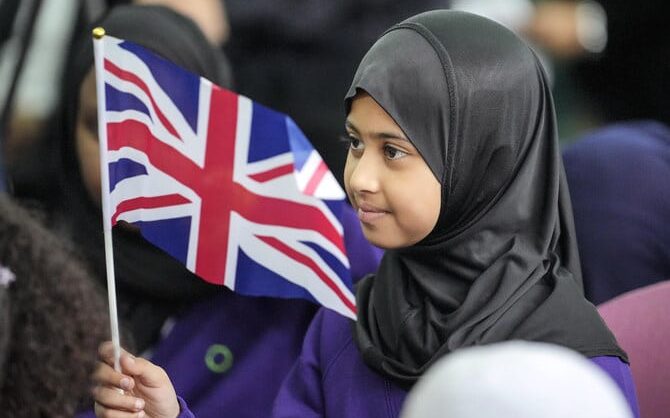
Photo: AP
The Essential Fault Line in UK Politics — and How British Muslims Can Overcome It
The visit of John Ratcliffe to Moscow on August 25 was the first by a serving CIA Director since William Burns met Vladimir Putin in November 2021, three months before Russia’s full-scale invasion of Ukraine. Two days later, Russian Foreign Ministry spokeswoman Maria Zakharova delivered the Kremlin’s sharpest threat yet against Britain. She warned that UK military positions, inside and outside Ukraine, could be struck over British-supplied missiles used by Kyiv on Russian territory.
The UK is preparing for conflict. Ministers have already committed £298 billion to defense over the next four years, taking annual spending to almost £80 billion by 2029. They have announced the largest home defense exercise in a generation, taking place next year, alongside the first rewrite of the government’s secret War Book since 2004.
Across Europe, the same preparations are underway. France launched a new military service scheme for 18- and 19-year-olds. The ten-month service is framed publicly as a gap year with purpose
rather than as a draft. Germany now requires every 18-year-old man to complete a questionnaire and medical screening. It is voluntary in name, but government officials say missed recruitment targets could see the Bundestag revisit compulsory service. Croatia has reinstated conscription, and ten EU states now have compulsory military service in some form.
Whether Britain follow the example of our neighbors remains to be seen. But the pressure is not dissipating. The question is whether British Muslims, and the leadership that speaks for them, are ready for the challenge.
The Place of The UK’s Muslims
British Muslims are the youngest population in the country, with median age of 27 against a national median of 40. Nearly half are under 25.
This would not be the first mobilization of a generation. More than 400,000 Muslim soldiers served in the British Indian Army in the World War I. Around 47,000 were killed and 65,000 wounded. In World War II, more than 50,000 Muslim sailors served in the Merchant Navy, over a quarter of the service’s personnel, and 6,600 perished. Yet only one in five people in Britain know of this history exists, and only 2% have any sense of its scale.
The difference now is what this generation of British Muslims brings to the table. Muslim students are relatively overrepresented in science, engineering, and technology subjects at university, the disciplines upon which any national resilience and defense effort will depend.
If reasonable, representative British Muslim voices are not in the room when decisions on defense and resilience planning are made, this will cede ground to those who do not have the best interests of British Muslims at heart. Recent history is littered with examples of organizations and individuals traded their integrity and credibility for access, and sometimes money, delivering nothing back to the people they claimed
to represent.
That risk is real. So is the concern of many within the British Muslim community who have watched successive British governments play a hand in the wars in Iraq and Afghanistan, as well as a role in Gaza.
However, the question now in front of British Muslims is not whether to endorse what successive governments have done, but whether to help decide what our country does next. For the state, that means engaging representative Muslim voices, not as the recipient of a colonial-style handout but as an equal stakeholder in what the UK becomes. For British Muslim leaders, it means being involved in the conversation about our country’s defense as soon as possible.
The UK will ask more of everyone in the years ahead, and British Muslims are as much a part of this country’s future as anyone else. Will they help decide what that means or only find out once the decision has already been made?
