
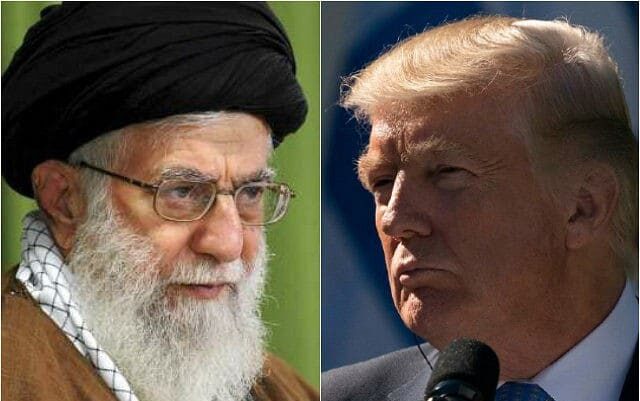
Iran’s Supreme Leader and Donald Trump
Iran Protests: After Deadly Repression, Regime Arrests Leading Activists
I remember the build-up to the 2003 Iraq War. I was just 10 years old, still learning how to navigate the world, when a group of boys at school chased me down chanting, “Kill Iraqis.” They eventually cornered me, raining down kicks and punches. I brushed it off as playground bullying. After all, I was British as well as Iraqi.
But the intimidation and violence were more than that. They were a preview of how entire communities could be dehumanized under the guise of national security. This was a glimpse of where the so-called War on Terror would lead.
I watched bombs rain down on Baghdad, my parents silently weeping as they tried to reach our family back home. I heard about an American patrol spraying my grandfather’s house with bullets from a .50 calibre machine gun mounted on a Humvee. I learned of relatives kidnapped for ransom by sectarian militias.
As an adult, I returned to Mosul. ISIS had seized the city in 2014, holding it for three years before a brutal and devastating liberation. I listened as my family recounted the agony they endured. Children played with stones amid the ruins, their innocence crushed beneath decades of foreign wars and sectarian violence.
I was in the audience when Jeremy Corbyn, then leader of the UK Labour Party, issued an apology for the Iraq War following the Chilcot Inquiry in July 2016.
Today, as the West flirts with escalation against Iran under a UK Labour government, I find myself asking the same question again: have we learned nothing from Iraq?
Manufacturing Consent, Again
The language now being used mirrors the build-up to Iraq in 2003: exaggerated threats, selective intelligence, and political theatre dressed up as necessity. Over the past few weeks, Donald Trump has spoken openly about sending a “massive armada” of American warships towards Iran, warning that time is running out for Tehran to comply with US demands.
Alongside this, findings by the International Atomic Energy Agency that Iran is in breach of certain nuclear obligations have been seized upon by Israeli officials. Over the past 18 months Benjamin Netanyahu has revived warnings he has been issuing since the early 1990s about an imminent Iranian nuclear bomb, warnings that have repeatedly failed to materialize.
The tactics feel familiar. Israel’s campaign has included crude CGI animations, recalling Colin Powell’s infamous slideshow at the UN Security Council in 2003, which claimed to show Saddam Hussein’s mobile chemical weapons laboratories. Claims that Iran poses a direct threat to Europe echo the UK Government’s “dodgy dossier”, which asserted that Iraq could deploy weapons of mass destruction within 45 minutes.
Where press conferences and newspaper editorials once played this role, aggressive social media messaging, and bot accounts now does the same work, faster and with even less scrutiny.
Just as Iraq’s weapons of mass destruction never materialized, we risk sleepwalking into another manufactured conflict built on assertion rather than evidence. Sabotaging nuclear negotiations and openly calling for regime change are not diplomatic strategies. They are steps towards war.
Iran’s Civilians Are Not the Enemy
Let me be clear. I hold no illusions about the Iranian regime. It is authoritarian, violent, and has long acted as a destabilising force across the region.
I have seen the aftermath of the regime’s actions among family and friends. Iran armed and funded sectarian militias in Iraq that abducted, tortured, and killed. It propped up Bashar al-Assad’s dictatorship in Syria, enabling the murder of hundreds of thousands and the displacement of more than 11 million people. At home, it crushes dissent with the same brutality it exports abroad./p>
In recent weeks, ordinary Iranians have again taken to the streets to protest corruption, repression, and economic collapse. They have been met with live fire, mass arrests, internet blackouts, and killings. Protesters have been shot, detained, and disappeared for demanding dignity and accountability. Thousands have been killed.
These civilians are not agents of the regime. They are among its primary victims.
But recognizing the crimes of the Iranian state does not justify war. It does not excuse bombing cities, destabilising an entire region, or gambling with human lives. The suffering of protesters cannot be repurposed as a moral cover for military escalation. The sins of those in power cannot be used to legitimize the slaughter of the people who already suffer under their rule.
Britain’s Complicity and the Politics of Silence
The UK followed the US into Iraq, helped sell the war to the public, and contributed troops and airpower. Today, the pattern repeats itself.
In recent statements, Prime Minister Keir Starmer has signalled British support for a US strike on Iran, saying he backs Donald Trump’s goal of preventing Tehran from acquiring nuclear weapons.
Starmer has justified this stance by pointing to Iran’s repression of protesters and the brutality of the regime. Those abuses are real and reprehnsible. But they are being used in a familiar way. In 2003, Saddam Hussein’s crimes were invoked to shore up support for war when the case for weapons of mass destruction began to collapse. Human rights became a moral cover for a regime change and war.
This is not de-escalation. It is preparation for escalation.
By aligning itself with American objectives and echoing their framing, the UK helps legitimise the path to war. And once again, the cost will be borne not by those making the decisions, but by civilians across the region.
Lessons Unlearned
The destruction and the rise of Islamophobia across the West are not accidental. They are the direct consequence of a global system that devalues Arab and Muslim lives.
The War on Terror, launched in Iraq and Afghanistan, shaped the world we now inhabit. It normalized surveillance and the criminalization of Muslim communities. It shattered states, dismantled institutions, and created the conditions from which groups like the ISIS emerged. It gave cover to autocrats and war criminals to crush dissent under the banner of counter-terrorism.
Manufacturing consent is not only about media narratives. It is about dehumanizing people so thoroughly that their deaths are reduced to statistics, and about persuading a new generation to forget that this has all been tried before and failed catastrophically.
This is not about supporting the Iranian Government. It is about opposing war, injustice, and the perpetual sacrifice of Middle Eastern lives in service of Western power.
We must learn from the Iraq War, not repeat it. The people of the region deserve peace, sovereignty, and dignity. Not another proxy war. Not another generation of shattered childhoods.
History is watching. This time, we cannot say we did not know.

Cabinet invites people to attend the 40th day memorial of the victims of January unrest: https://www.mehrnews.com/news/6750733
“The government and the honorable president, while reiterating their condolences to all compatriots, especially the bereaved families, invite all segments of the noble nation of Iran to attend the 40th anniversary of their death, which will be held on Tuesday, February 17, 2019 at 2:30 in the Imam Khomeini Mosque in Tehran and from 6:00 in the Razavi holy shrine in Mashhad, as well as other ceremonies held in the capitals of different provinces. Be yourself a balm for the burnt hearts of the beloved mourners.”
Security forces fire at mourners during 40th-day memorial in Abdanan
Security forces fired at a large gathering of mourners during 40th-day memorials on Tuesday in Abdanan for those killed in the protests, injuring several people, a video received by Iran International showed.
Security forces fired at a large gathering of mourners during 40th-day memorials on Tuesday in Abdanan for those killed in the protests, injuring several people, a video received by Iran International showed.pic.twitter.com/yQMMoQ6vA7
— Iran International English (@IranIntl_En) February 17, 2026
https://www.iranintl.com/en/liveblog/202602154712#202602172242
Huge number of applicants for Majlis and Assembly of Experts elections: https://dolat.ir/detail/476461
The head of the country’s election headquarters, stating the number of registrations, said: “The total number of registrations in the midterm elections of experts was 110 people, and in the midterm elections of the Islamic Consultative Assembly, 309 people registered.”
There are 5 empty Majlis seats and 4 empty Assembly of Experts seats.
Few Democrats and most Republicans support military action in Iran: https://today.yougov.com/politics/articles/53919-few-democrats-most-republicans-support-military-action-in-iran-january-16-19-2026-economist-yougov-poll
“More Americans oppose than support U.S. military intervention in Iran, including using force to overthrow Iran’s leader and bombing Iran in response to its treatment of protesters. However, many think the U.S. military is likely to take action in Iran in the next month. A larger share of Americans disapprove than approve of Trump’s handling of Iran.”
Rubio says U.S. to attempt new Iran deal: https://www.reuters.com/video/watch/idRW584016022026RP1/
Iran is dangling economic opportunities for US companies.
Iranian rallies across the globe in support of Iranians inside Iran
https://www.facebook.com/reel/892358186938247
https://www.euronews.com/2026/02/14/hundreds-of-thousands-gather-in-munich-demanding-regime-change-in-iran-amid-ongoing-protes
https://abc7.com/post/massive-crowd-gathers-iranian-global-day-action-protest-downtown-los-angeles/18601906/
https://www.abc.net.au/news/2026-02-14/thousands-march-in-day-of-action-for-iran-regime-change-pahlavi/106336244
TV presenter and journalist, Bushra Shaikh, starts meeting the families of those killed in January: https://x.com/Bushra1Shaikh/status/2022634759105511638
[Editor’s Note: More from the Iran regime’s managed visit by a UK activist….]
More from Bushra: https://x.com/Bushra1Shaikh/status/2022641433983791358
“Witnesses said Amir was attacked by violent protestors, describing armed individuals who had blended into the surrounding crowds. “You couldn’t tell, who was who. They were shooting for fun.”
US military prepares “sustained, weeks-long” war against Iran: https://www.wsws.org/en/articles/2026/02/14/twum-f14.html
“he US military is preparing for “sustained, weeks-long operations” against Iran if US President Donald Trump orders an attack, Reuters reported Friday, citing US officials. The planned campaign would mark a far larger US assault on Iran than anything previously carried out. In a sustained campaign, the US military could hit “Iranian state and security facilities, not just nuclear infrastructure,” one of the officials said. The United States “fully expected Iran to retaliate, leading to back-and-forth strikes and reprisals over a period of time”.. Such a war could entail massive loss of life and have incalculable global consequences. It would be illegal under international law and take place in defiance of the popular will, with 85 percent of the American population opposed to a war against Iran, according to a YouGov poll.”
What is astonishing is how there are no clamours in Congress for Trump not to embark on such a misadventure without authorisation as well as at the U.N security council. Trump hasn’t even articulated his rationale for going to war.
The time for riding the gravy train (moft khory) is up, reza
Approval of the qualifications of 1811 candidates for the city council elections in Mashhad | Only 19 people were disqualified: https://shahraranews.ir/fa/news/391469
“Out of a total of 2,126 candidates to participate in the city council elections in the city of Mashhad, 1,811 people were qualified. 19 candidates were also disqualified based on the inquiries of the five supervisory bodies, and 292 people were facing a lack of documents, and these people have been given an opportunity to re-examine their qualifications after resolving the deficiencies in their documents.” Also, 4 of the candidates announced their withdrawal.”
Local elections are not vetted by the Guardians Council supervisory boards and requirements are less strict.
https://www.instagram.com/reels/DUDz8weiFQk/
U.S. Smuggled Thousands of Starlink Terminals Into Iran After Protest Crackdown: https://www.wsj.com/world/middle-east/u-s-smuggled-thousands-of-starlink-terminals-into-iran-after-protest-crackdown-69a8c74f?gaa_at=eafs&gaa_n=AWEtsqeaw2qMRnZ1faKIOE6E0HzBkJn-q_04zWBfGrrPY-AjzH61VtvJkMMM6ASISaM%3D&gaa_ts=698e76ba&gaa_sig=TbBlHJ8dSS8nQBDjy_BkDkXavFzR_EfwrYEpvgkmF4g1cnm8trv4CQly0ohRHrWX4C6PK-sKd3S1uFjdueK13g%3D%3D
“The Trump administration has denied fomenting public unrest in Iran, but the operation shows it has provided covert support to antiregime efforts.”
So your problem is the news of killings by the foreign militia that you “smuggle” in might spread?
https://www.fdd.org/analysis/2025/10/13/how-the-iranian-regimes-foreign-proxies-suppress-iranian-protestors/
Pezeshkian criticises those who inflated unrest deaths for propaganda purposes: https://www.tasnimnews.ir/fa/news/1404/11/23/3515744
“Those people who sat there at the podium and claimed that we killed 50,000 or 60,000 people, and then when we gave statistics, they said, ‘we only wanted to turn the world against Iran so that they would attack Iran.'”
So, who is criticizing????
“…Reports by the Intelligence Organization of the Islamic Revolutionary Guard Corps were of 33,000 on 22 January and 36,500 on 24 January.[52]”
https://en.wikipedia.org/wiki/2026_Iran_massacres
And that is only the official admission
[Editor’s Note: A summary of regime claims about the rallies it organized on Wednesday, including the assertion that more than 1 in 3 Iranians participated.]
47TH ANNIVERSARY OF THE VICTORY OF THE ISLAMIC REVOLUTION OF IRAN: https://wanaen.com/47th-anniversary-of-the-victory-of-the-islamic-revolution-of-iran/
“Field assessments and reports from journalists across Iran indicate that the nationwide rallies held on February 11, 2026, marking the anniversary of the victory of the Islamic Revolution, were carried out on an unprecedented scale, with massive public participation. The turnout is being described as one of the largest popular gatherings in Iran in recent years. According to these estimates, between 23 and 26 million people took part in the rallies across more than 1,400 districts, cities, and counties nationwide. These figures do not include participants from nearly 40,000 villages across the country and are limited to urban and county centers only.”
[Editor’s Note: More recycling of regime claims about its rallies on Wednesday….]
Millions on streets celebrating Iranian Revolution 47th anniversary: https://wrp.org.uk/features/millions-on-streets-celebrating-iranian-revolution-47th-anniversary/
“February 11, 2026, marked the 47th anniversary of the 1979 Islamic Revolution, with millions marching across cities and towns nationwide.”
Millions rally in Iran to mark 47th anniversary of revolution: https://5pillarsuk.com/2026/02/11/millions-rally-in-iran-to-mark-47th-anniversary-of-revolution/
“Huge crowds poured into Tehran’s main squares and into public spaces across roughly 1,400 cities and towns, in a display of national unity amid threats by the US and Israel in recent weeks.”
Millions in streets across Iran for Islamic Revolution anniversary marches: https://en.isna.ir/news/1404112213233/Millions-in-streets-across-Iran-for-Islamic-Revolution-anniversary
“Millions of Iranians have marked the anniversary of the 1979 Islamic Revolution with nationwide rallies.”
Millions of Iranians participate in nationwide rallies to mark the 47th anniversary of the victory of the Islamic Revolution: https://safir.af/en/2026/02/11/millions-of-iranians-participate-in-nationwide-rallies-to-mark-the-47th-anniversary-of-the-victory-of-the-islamic-revolution/
“Millions of Iranians marched along designated routes to the squares and main centers of cities to celebrate the 47th anniversary of the victory of the Islamic Revolution with all possible splendor.”
https://www.instagram.com/reels/DUAIt-qjR5e/
Iran Commemorates Revolution, With U.S. Warships Lurking Off the Coast: https://www.nytimes.com/2026/02/11/world/europe/iran-revolution-anniversary.html
“Huge crowds of government supporters gathered on the streets of Tehran, festooned with the red-white-and-green flags of the Islamic Republic. Some chanted “death to America,” while others burned U.S. and Israeli flags or carried caricatures of Mr. Trump and Benjamin Netanyahu, Israel’s prime minister.”
Woman without headscarf attending Revolution anniversary calls for national solidarity in face of threats to Iran: https://snn.ir/fa/news/1368694
Photos of today’s massive rallies:
https://www.mehrnews.com/photo/6746636
https://www.isna.ir/photo/1404112213514
People from all walks of life braved the rain and freezing temperatures to show their support for their own nation and system.
https://www.instagram.com/reels/DUDz8weiFQk/
https://www.instagram.com/p/DUESa7JjWIo/?igsh=MTQ3djhubzc4bnMyeQ%3D%3D
https://www.instagram.com/reels/DUltNDgE1vo/
https://www.instagram.com/p/DUTanWLFuMe/?igsh=dXp3bjQxbG9vZ2E2
Maybe khamenei can explain how come his son is in relationship with Hilton of great satan….
https://www.iranintl.com/en/liveblog/202602011665#202602123979
https://www.indiatoday.in/world/story/mojtaba-khamenei-luxury-london-homes-european-hotels-shell-companies-iran-protest-glbs-2860084-2026-01-30
https://www.afr.com/world/middle-east/how-the-son-of-iran-s-supreme-leader-built-a-global-property-empire-20260129-p5nxxj
“…a global system that devalues Arab and Muslim lives.”
It is islam that devalues arab or otherwise lives
A good muslim is a lapsed muslim. That is my 70 years of experience as a born muslim living among muslims.